Section 1 of 6
The Landing
The riverbank, the founding grid and the reasons Cincinnati existed before anything west of it did.
Losantiville, 1788: the Name Nobody Kept — the piece this section opens with.
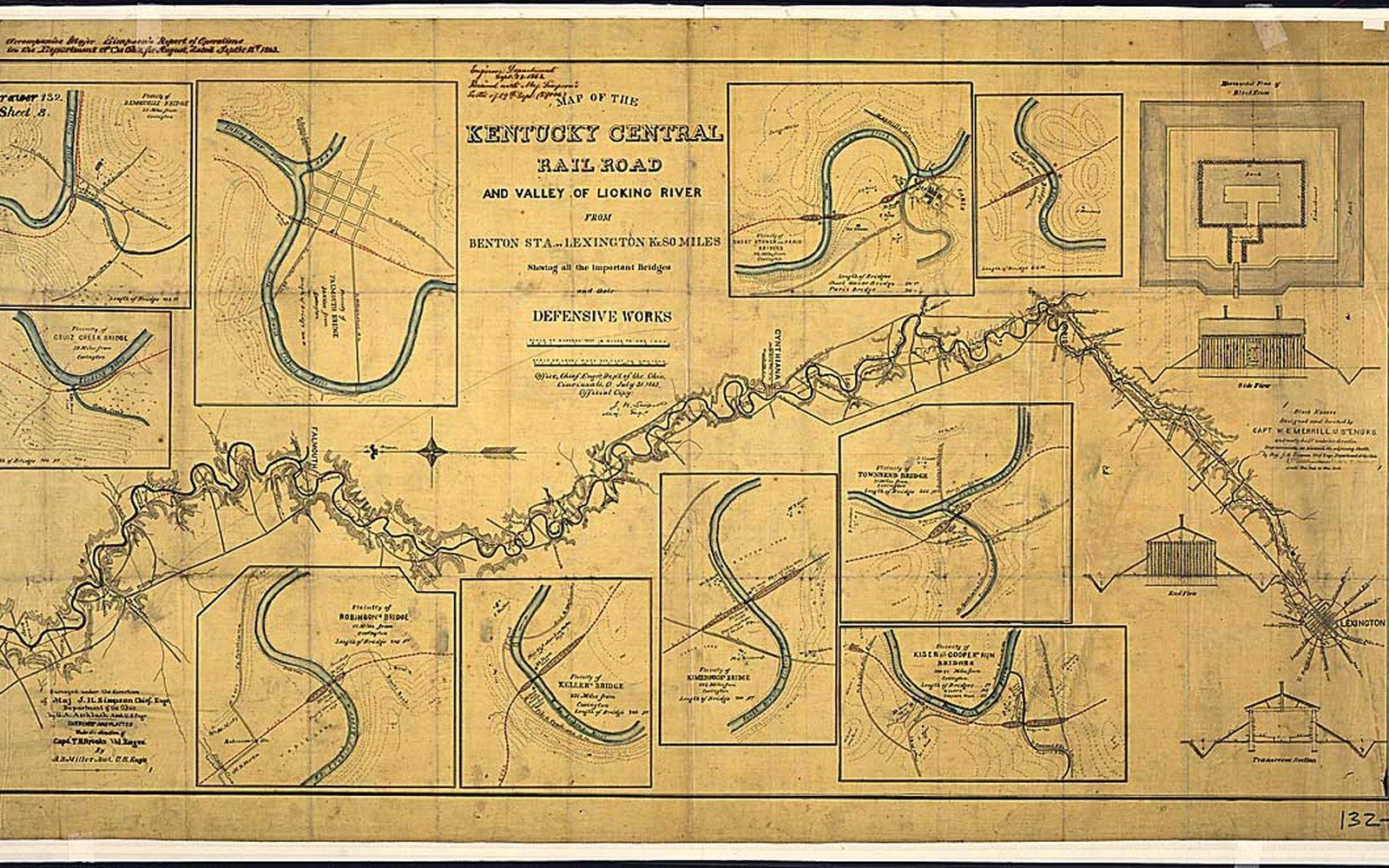
Photo: Map of the Kentucky Central Rail Road and Valley of Licking River from Benton Sta. to Lexington, Ky., 80 miles, Showing all the important Bridges and their Defensive Works. Surveyed under the direction of Maj. J. H(...) - NARA - 305765 · Wikimedia Commons5 pages in this section
- Losantiville, 1788: the Name Nobody KeptJohn Filson coined 'Losantiville' from a hybrid of Latin and Delaware for the settlement opposite the Licking River mouth; Arthur St. Clair renamed it Cincinnati for the Society of the Cincinnati in 1790. This piece traces both names to their sources and explains why the Society's name stuck.
- One Bend, One Terrace, One GridThe Ohio's northward loop at Cincinnati created a natural terrace — the 'basin' — that made the site defensible, flood-resistant by 1788 standards, and reachable by flatboat. Covers the original survey, the street grid and why no other Ohio River town grew as fast in the first fifty years.
- Findlay Market Has Been Open Since FillmoreOhio's oldest continuously operating public market opened in 1852 on land donated by James Findlay; this piece covers the market's physical layout, its Over-the-Rhine context and the vendors who have occupied the same stalls across multiple generations.
- January 1937: the River Takes the City BackThe January 1937 Ohio River flood crested at 79.99 feet (National Weather Service, 1937) — the highest recorded level — and displaced an estimated 60,000 Cincinnati residents. Covers the cresting timeline, which neighbourhoods went under first and what the waterline marks still visible on buildings actually mean.
- When the Steamboats Came BackTall Stacks, the periodic gathering of historic steamboats on the Cincinnati riverfront, drew more than a million visitors to its 1988 inaugural event; this piece covers the boats that appeared, the history they were assembled to mark and what the event said about the city's relationship with a river it had largely stopped using.
One bend in the river, and hills that stopped it spreading
The basin, the Ohio, and the Kentucky bank opposite. Covington and Newport are a different state and a five-minute walk.
The other five