When the Steamboats Came Back
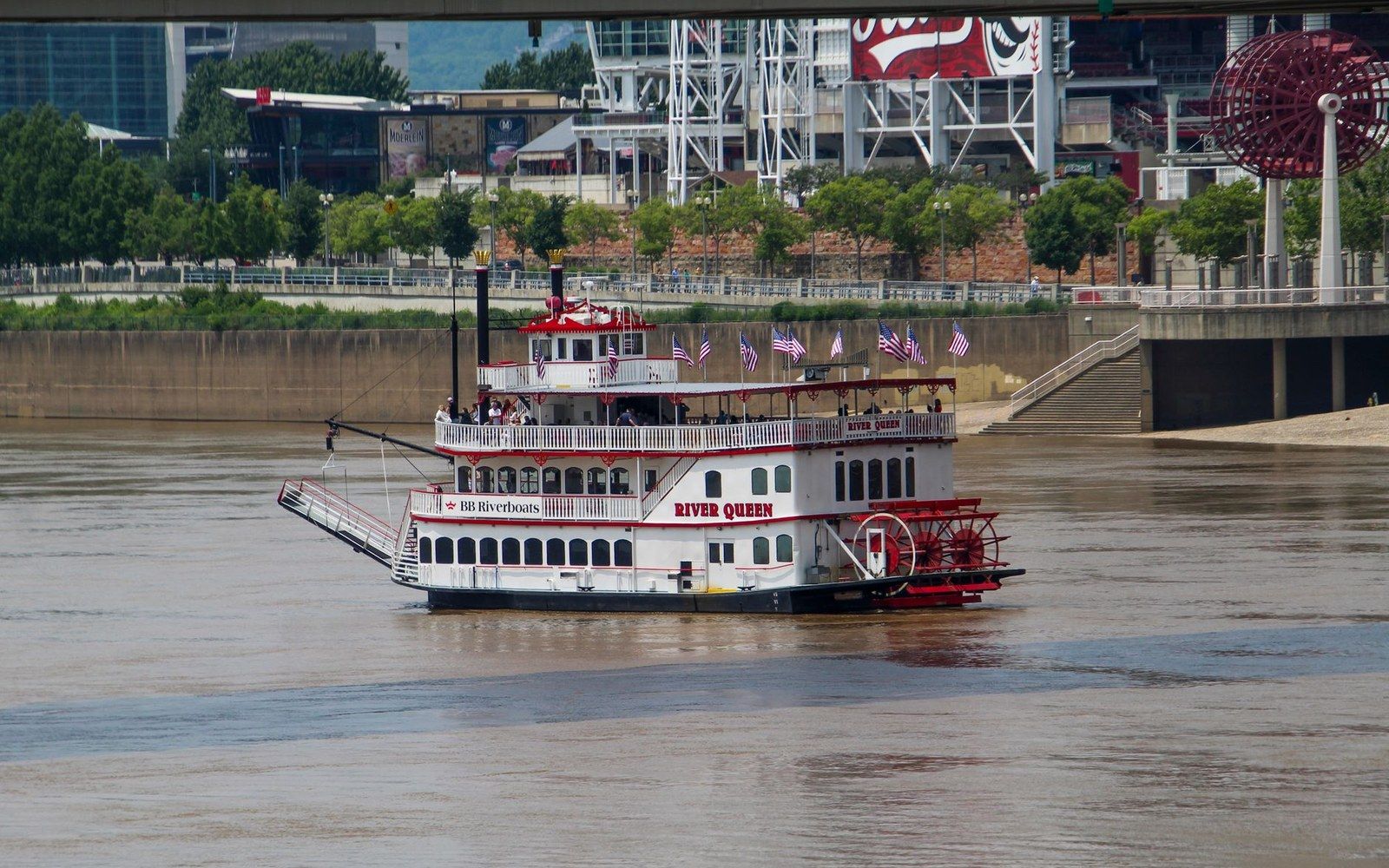
Tall Stacks, the periodic gathering of historic steamboats on the Cincinnati riverfront, drew more than a million visitors to its 1988 inaugural event;
Photo: Karen F / PexelsTall Stacks brought historic steamboats back to Cincinnati's riverfront and, for a few October days, made it easy to forget the river had ever been bypassed.
The Gathering on the Ohio
Cincinnati was built on steamboat commerce. From the 1820s through the Civil War era, the city's basin levee was one of the busiest inland ports in North America, handling produce, livestock and manufactured goods moving between Pittsburgh and New Orleans. By the late twentieth century that relationship had collapsed into something closer to indifference: Interstates had replaced packet boats, and the riverfront itself was largely given over to parking and stadiums.
Tall Stacks was conceived as both celebration and corrective. The inaugural festival ran in October 1988, organised to mark the bicentennial of Cincinnati's founding in 1788, and drew what organisers recorded as more than one million visitors to the Public Landing over several days. The boats that appeared included the Delta Queen, built in 1926 and by then operating as an overnight passenger vessel on the Mississippi and Ohio river systems, and the Belle of Louisville, a 1914 sternwheeler that is listed on the National Register of Historic Places ↗ and remains the oldest operating Mississippi-style steamboat in the country. The sight of tall smokestacks and paddlewheels against the Cincinnati skyline, with the Roebling suspension bridge framing the scene from the Kentucky side, was striking enough that the event was revived in 1992, 1995, 1999, 2003 and 2006.
Each iteration assembled a rotating fleet. The Mississippi Queen, the American Queen and the Julia Belle Swain all appeared across various years, alongside smaller excursion boats. What the gathering made visible was how few true steam-powered sternwheelers remained — the diesel-powered boats that now worked the river were a different machine in everything but silhouette. The history of American steamboat navigation on the Ohio had effectively ended by the early twentieth century, and Tall Stacks was, among other things, a museum spread across open water.
Tall Stacks was conceived as both celebration and corrective.
The festival did not restore the working relationship between Cincinnati and the Ohio River — the freight terminals and packet trade were gone for good — but it gave a generation of residents a physical encounter with the scale and noise of steam propulsion that no archive photograph could approximate. For the duration, the levee functioned as it once had: crowded, loud and oriented entirely toward the water.
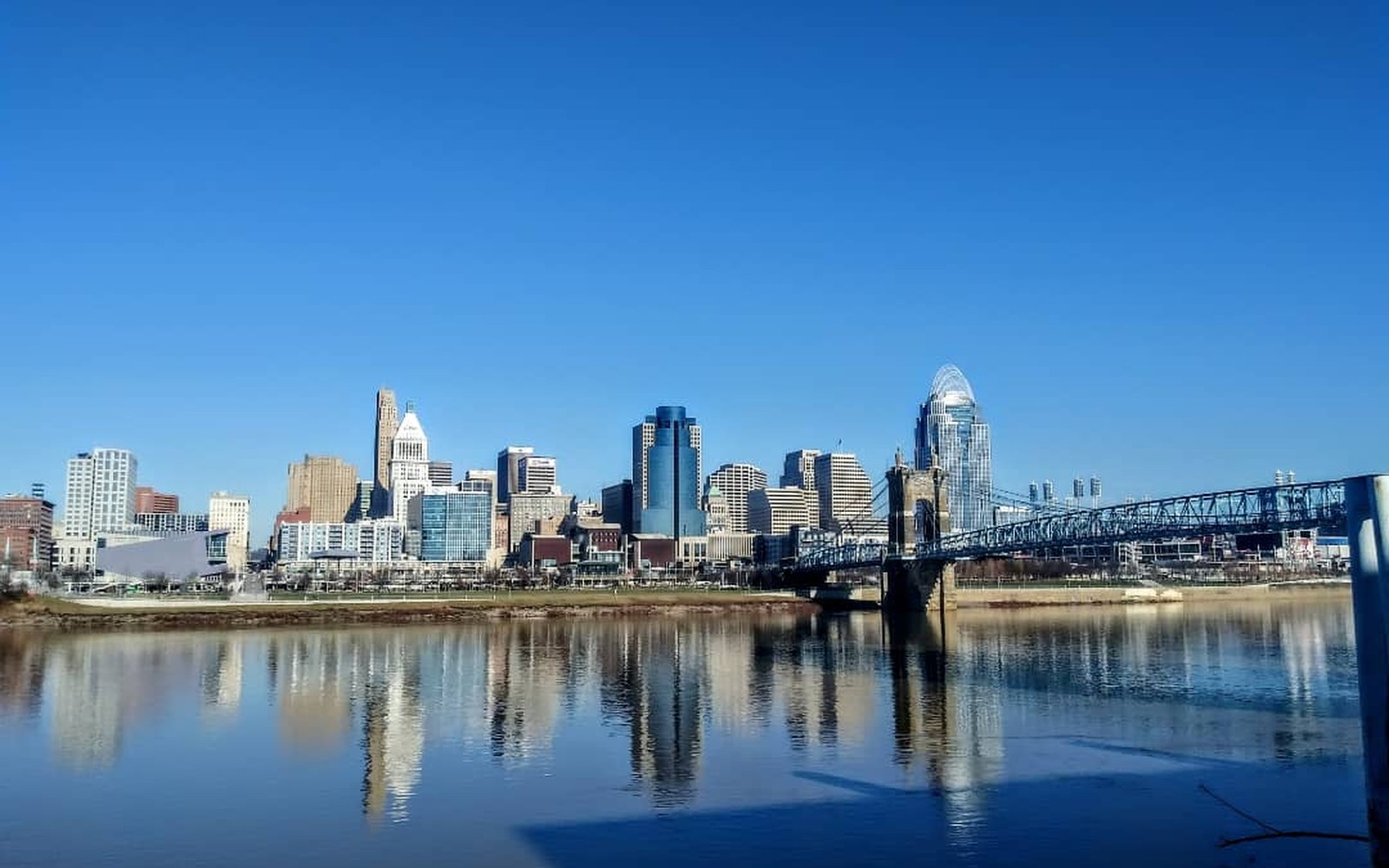
The Ohio's northward loop at Cincinnati created a natural terrace — the 'basin' — that made the site defensible, flood-resistant by 1788 standards, and reachable by flatboat. One Bend, One Terrace, One Grid
Photo: Cincinnati Ohio · Wikimedia CommonsFrom the record
Chronology
- 1788Cincinnati founded at the Ohio River landing
- 1820s–1860speak steamboat era on the Cincinnati levee
- 1914Belle of Louisville built
- 1926Delta Queen built
- 1988inaugural Tall Stacks festival; bicentennial year; more than one million visitors recorded
- 1992, 1995, 1999, 2003, 2006subsequent Tall Stacks events
From the record
Vessels mentioned
- Delta Queen1926 overnight passenger steamboat; steam-powered sternwheeler
- Belle of Louisville1914 sternwheeler; National Register of Historic Places; oldest operating Mississippi-style steamboat in the US
- Mississippi Queen, American Queen, Julia Belle Swainappeared in later Tall Stacks iterations
More in The Landing