Findlay Market Has Been Open Since Fillmore
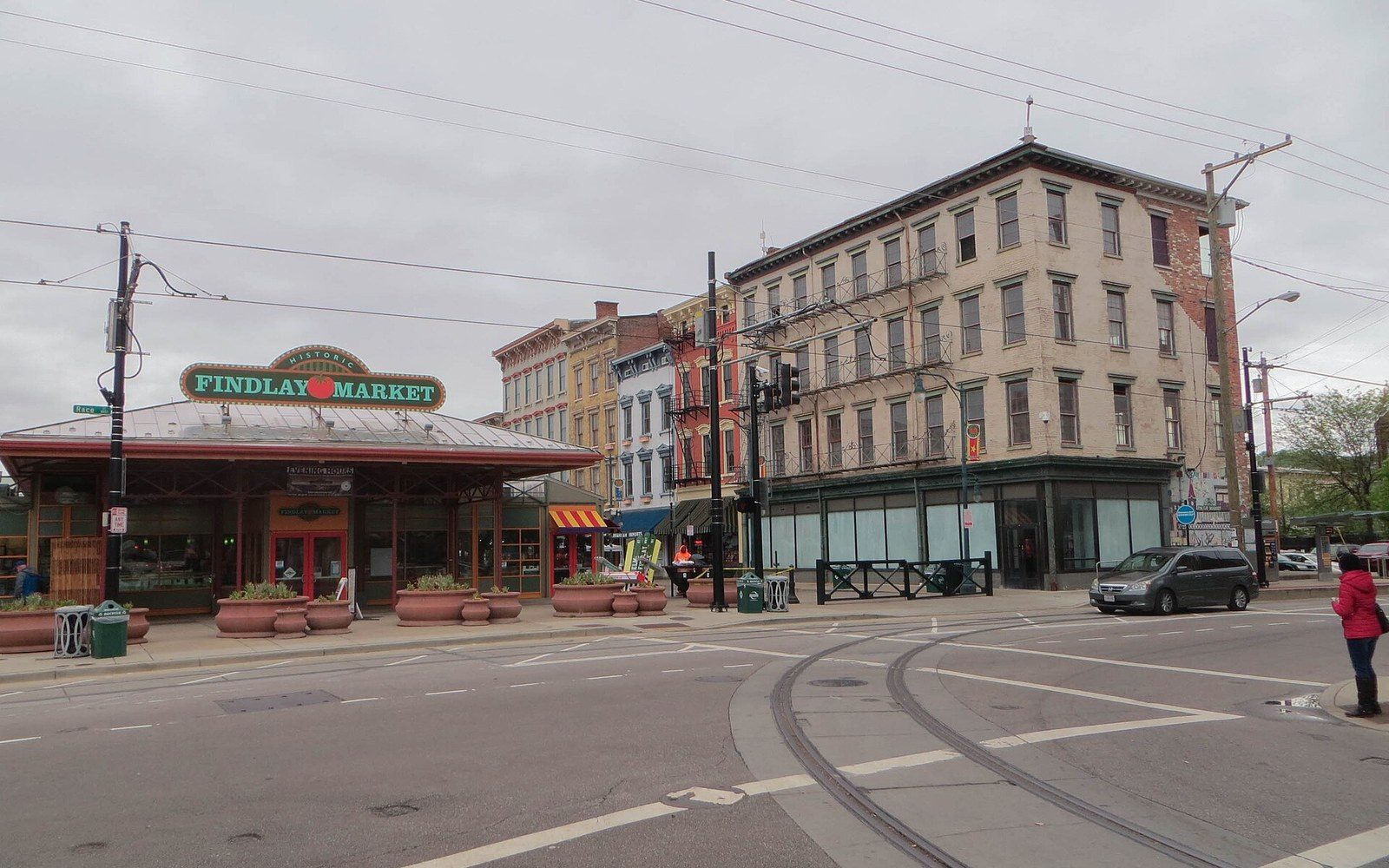
Ohio's oldest continuously operating public market opened in 1852 on land donated by James Findlay;
Photo: 20170422 27 Elder & Race Sts - 36205942641 · Wikimedia CommonsOhio's oldest public market opened in 1852 on donated land and has traded through every disruption the city has thrown at it since.
The Ground It Stands On
James Findlay, a former Cincinnati mayor and U.S. Army general, left the land for the market that bears his name, which the city opened as a market in 1852. The city erected the first permanent market house in 1852, during the presidency of Millard Fillmore, making Findlay the oldest continuously operating public market in Ohio. It sits at the northern edge of Over-the-Rhine, on Elder Street between Race and Elm, precisely where the dense German immigrant neighbourhood needed a provisioning hub within walking distance of its tenements and breweries.
The market house itself is a long, open-sided shed — cast iron and brick, restored in the early 2000s under a city-led rehabilitation program — running along Elder Street with permanent vendor stalls arranged in fixed bays beneath the roof. Surrounding it on all sides are freestanding market buildings and storefronts that date to the nineteenth century, many of them still carrying their original masonry fronts. The footprint has not dramatically changed since the 1880s. A visitor standing at the Elm Street corner today is looking at essentially the same spatial relationship between the central shed and the surrounding stalls that a shopper in 1890 would have recognised.
What the Stalls Actually Hold
On Saturdays and Sundays the open shed fills with farmers, bakers, flower growers and prepared-food vendors who drive in from the surrounding region. On Saturdays year-round — and Wednesdays from spring through autumn — the outdoor spaces expand into the adjacent streets. The permanent interior stalls, occupied Tuesday through Sunday, are held by merchants some of whose family connections to the market stretch back several generations.
Regulars include meat vendors, fishmongers, cheese sellers and specialty grocers whose presence keeps Findlay a working provisions market rather than a purely recreational one. Eckerlin Meats, often cited as one of the longest-tenured vendors, is among the operations that have occupied their stall for decades. Goetta — the pork-and-beef-and-pin-oat breakfast meat that arrived with Cincinnati's German population — appears at multiple counters, a direct link to the neighbourhood's immigrant provisioning habits of the nineteenth century. The market's ethnic range has widened across the twentieth century; vendors of Middle Eastern, West African, Latin American and Southeast Asian goods now share the shed with the butchers and produce sellers who defined the market's earlier identity.
Survival and Renovation
Findlay Market outlasted the forces that closed nearly every comparable urban market in the Midwest. By the 1970s, when downtown Cincinnati was losing retail and Over-the-Rhine was in severe economic decline, the market continued to trade, albeit with reduced vendor numbers. The Cincinnati Public Market Foundation and the City of Cincinnati undertook a significant restoration of the market shed ↗ in the early 2000s that stabilised the iron structure, upgraded utilities and drew new vendors back into the permanent stalls. The surrounding neighbourhood's partial recovery since then — visible in the reoccupied Italianate storefronts on Vine Street nearby — has added foot traffic without displacing the market's provisioning function.
The 1852 market house is listed on the National Register of Historic Places ↗, a designation that reflects both its architectural continuity and its documentary importance as an unbroken piece of urban commercial infrastructure. No other Ohio market open today can claim the same uninterrupted operating record. That is not a marketing claim; it is simply what the calendar shows when the opening date is set against the present.
Army general, left the land for the market that bears his name, which the city opened as a market in 1852.
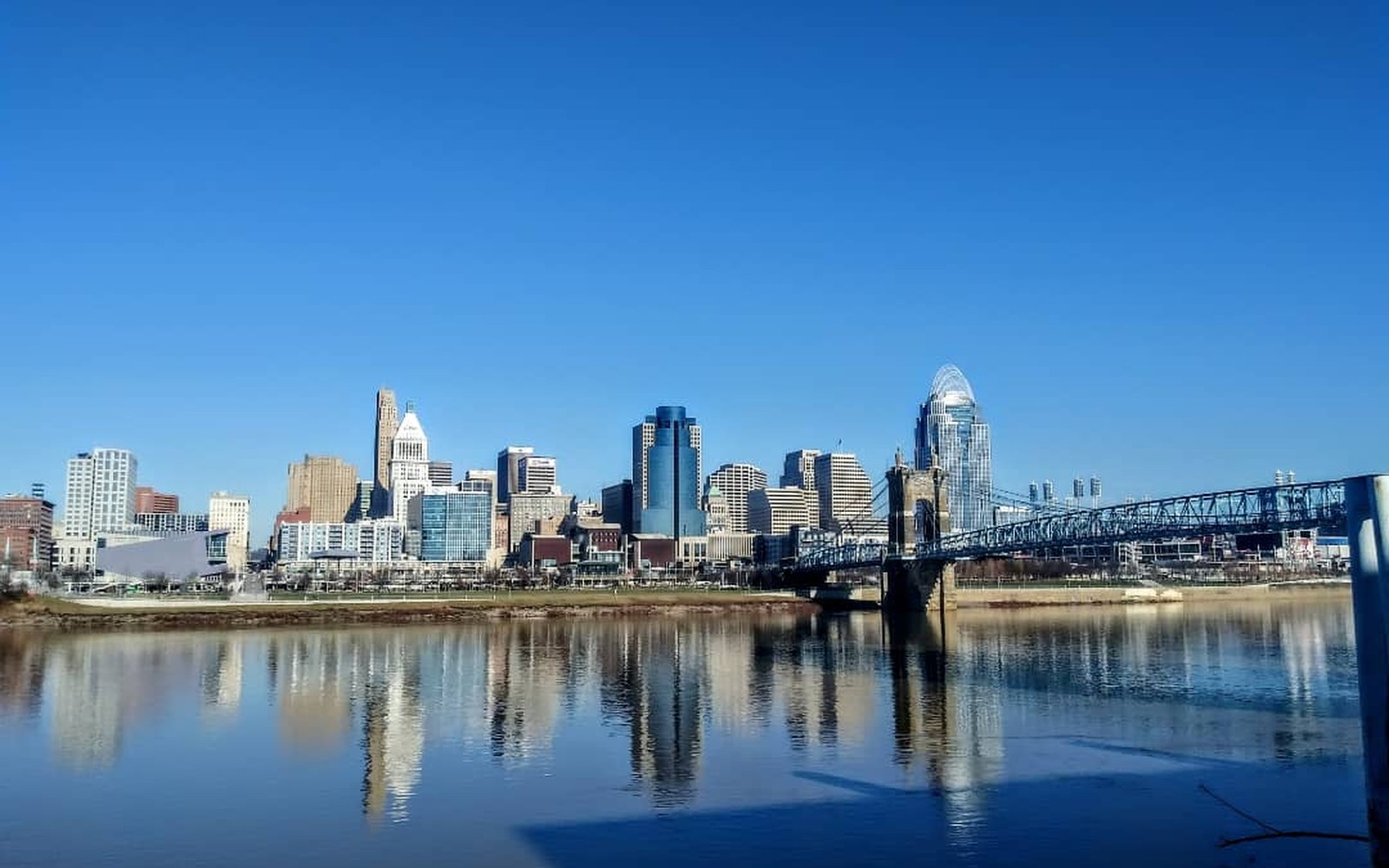
The Ohio's northward loop at Cincinnati created a natural terrace — the 'basin' — that made the site defensible, flood-resistant by 1788 standards, and reachable by flatboat. One Bend, One Terrace, One Grid
Photo: Cincinnati Ohio · Wikimedia CommonsFrom the record
Chronology
- 1852market house erected on land donated by James Findlay; Ohio's oldest continuously operating public market begins trading
- 1880ssurrounding masonry storefronts largely complete; the footprint stabilises in its current form
- 1970svendor numbers decline as Over-the-Rhine neighbourhood deteriorates
- Early 2000scity-led rehabilitation restores the cast-iron shed; new vendors return to permanent stalls
More in The Landing