Maria Longworth Nichols and the Kiln on Eastern Avenue
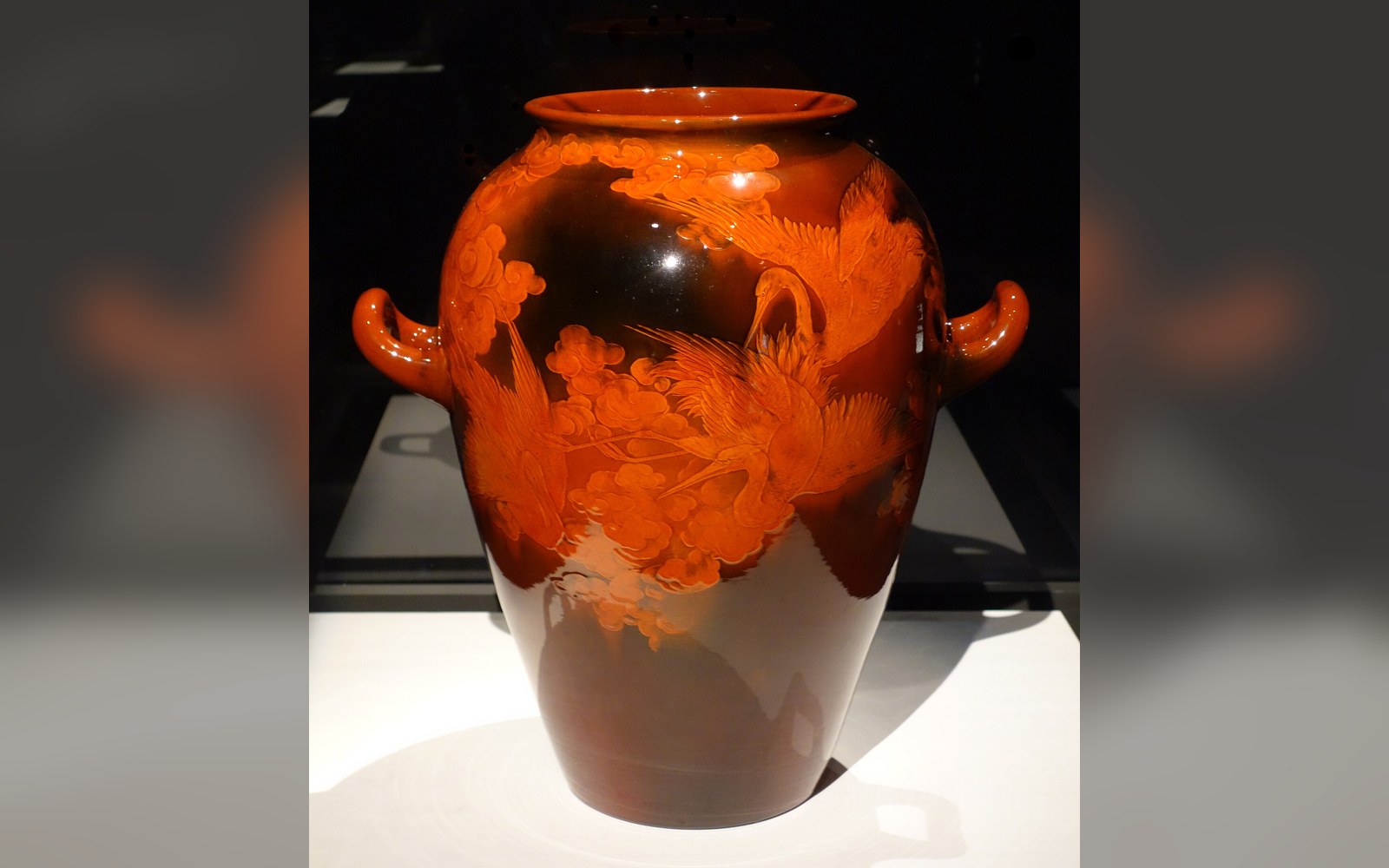
Maria Longworth Nichols founded Rookwood Pottery in Cincinnati in 1880 in a former schoolhouse on Eastern Avenue, producing art pottery that won international acclaim.
Photo: Vase by Albert Robert Valentien, Rookwood Pottery Company, 1893, earthenware with mahogany glaze line - Cincinnati Art Museum - DSC03022 · Wikimedia CommonsRookwood Pottery began as an heiress's experiment and became an American art institution — its glazes still coat the walls of two Cincinnati landmarks.
From Schoolhouse to Studio
Maria Longworth Nichols founded Rookwood Pottery in 1880, leasing a former schoolhouse on Eastern Avenue in Cincinnati and converting it into a working studio. The choice of site was practical — the building had space for kilns and wheels — but the ambition behind it was larger than the address suggested. Nichols, born into the Longworth family whose fortune underwrote much of nineteenth-century Cincinnati, had studied decorative painting and ceramic technique, and she intended to build something genuinely professional rather than another genteel hobby shop.
The pottery took its name from her family's estate, and from its first year it operated with paid decorators alongside volunteers. That distinction mattered: Rookwood was conceived as a commercial enterprise that happened to make objects of exceptional quality, not an amateur collective dressing itself in trade. The studio drew women decorators in particular at a time when few skilled craft industries offered them salaried positions. By the mid-1880s the payroll included trained artists whose work was signed on the base of each piece, making individual authorship a selling point rather than an afterthought.
The Glazes That Made the Name
The technical achievements that lifted Rookwood above its contemporaries came in the decade after founding. The standard glaze ↗ — a high-gloss clear topcoat fired over slip-painted decoration — was developed and codified by the late 1880s. It produced the luminous, slightly amber surface that most collectors associate with Rookwood's mature style: flowers, portraits and natural subjects painted in coloured slips, then sealed under glass-smooth glaze, each piece unique in its decoration while consistent in its fired character.
More technically demanding was the tiger-eye glaze, a crystalline effect producing a gold aventurine shimmer within the body of the piece. Achieved through precise manipulation of kiln temperature and atmosphere, it was considered among the most difficult glazes of the American art pottery period, and successful examples were rare enough to command premium prices from the start. Both glazes were in production in time for the pottery's defining moment of international recognition.
At the 1889 Paris Exposition Universelle ↗, Rookwood was awarded a gold medal — a result that confirmed the pottery's standing not just in Cincinnati or in the United States but against the European ceramics tradition from which American art pottery had been trying to distinguish itself. The award arrived nine years after Nichols had signed a schoolhouse lease on Eastern Avenue.
The choice of site was practical — the building had space for kilns and wheels — but the ambition behind it was larger than the address suggested.
What the Buildings Still Hold
Nichols sold her controlling interest in Rookwood in 1890, the year after Paris, stepping back from the directorship though not from Cincinnati's cultural life. The pottery itself continued under new management and grew into a significant industrial concern, supplying architectural tiles for buildings across the country. Two of the most visible surviving installations are in Cincinnati itself.
The lobby of the Carew Tower, the Art Deco skyscraper completed in 1930, contains Rookwood tile work integrated into its ornamental scheme. The tiles carry the geometric and foliate motifs characteristic of the period, fired to the standards the pottery had maintained since the 1880s. Across town, Cincinnati Union Terminal, opened in 1933, incorporates Rookwood tile into its interior surfaces — part of the same programme that brought Winold Reiss's mosaics to the concourse. Both installations remain in place and in public view, making them among the most accessible evidence of Rookwood's architectural reach.
The pottery itself moved several times after leaving Eastern Avenue, operated under different owners across the twentieth century, and was eventually acquired and revived as a production facility. The Eastern Avenue schoolhouse is long gone. What survives is the standard by which Nichols measured the enterprise from the beginning: signed, documented, permanently glazed.
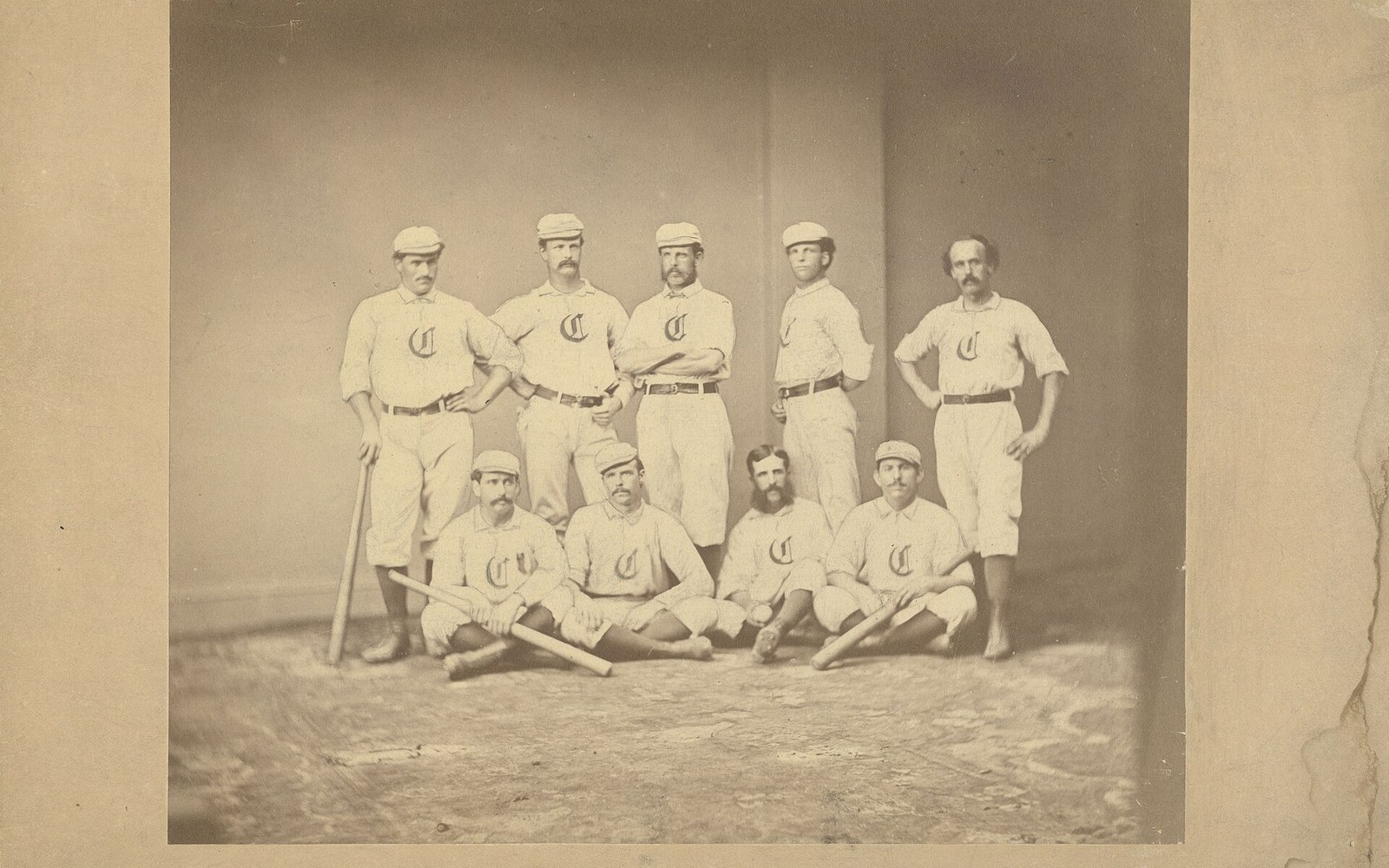
The 1869 Cincinnati Red Stockings were the first openly all-professional baseball club, going undefeated through 57 games under Harry Wright. The First Team That Admitted It Was Paying Everyone
Photo: Cincinnati Red Stockings, 1869 - DPLA - a61b113d0e78e3c1fc904330bb2fcbed · Wikimedia CommonsFrom the record
Chronology
- 1880Rookwood Pottery founded by Maria Longworth Nichols in a former schoolhouse on Eastern Avenue
- Late 1880sstandard glaze and tiger-eye glaze codified in production
- 1889gold medal awarded at the Paris Exposition Universelle
- 1890Nichols sells controlling interest; pottery continues under new management
- 1930Carew Tower opens; Rookwood tile installed in lobby
- 1933Cincinnati Union Terminal opens with Rookwood tile in its interior
More in Queen City