Music Hall: the Building the City Voted to Tear Down Twice
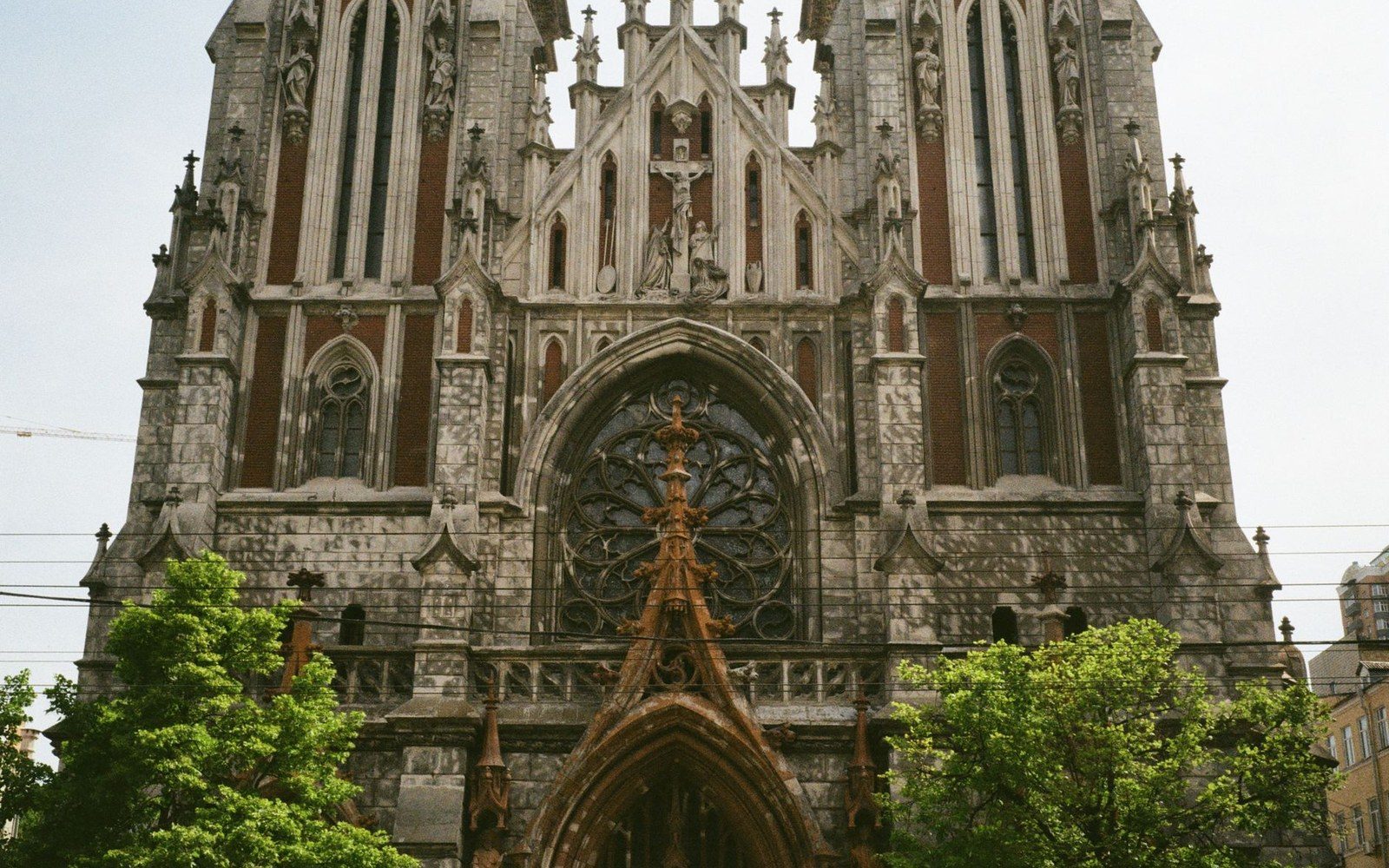
Cincinnati Music Hall, opened in 1878 to a Samuel Hannaford design in High Victorian Gothic, was condemned and nearly demolished on at least two separate occasions.
Photo: Marharyta Volkova / PexelsHigh Victorian Gothic on Elm Street: Samuel Hannaford's 1878 concert hall survived two demolition campaigns before a $143 million restoration proved the third opinion right.
Built for a Festival, Kept by Argument
The Cincinnati May Festival needed a home. Founded in 1873 by conductor Theodore Thomas, the choral gathering drew audiences too large for any existing hall in the city, and civic ambition demanded something permanent. The result was Cincinnati Music Hall ↗, designed by local architect Samuel Hannaford and opened in 1878 on Elm Street at the edge of Over-the-Rhine. Hannaford worked in High Victorian Gothic — polychrome brick, lancet windows, steep gabled dormers and a central rose window nearly fourteen feet across — producing a building that read less like an entertainment venue than like a declaration that Cincinnati intended to be taken seriously.
The hall seated more than three thousand at opening. It hosted the May Festival, the Cincinnati Symphony Orchestra after the orchestra's founding in 1895, and a succession of exhibitions, political conventions and even livestock shows in its lower hall. The range of uses was a symptom of what would become a recurring problem: a building built for grand occasions struggled to pay its way between them.
Two Votes Against It
By the 1950s the argument against Music Hall was straightforward. The structure was old, maintenance was expensive, the neighbourhood had declined and automobile-era city planners preferred clearance to repair. A demolition proposal in that decade gathered genuine political momentum before preservation advocates, the symphony and a coalition of civic institutions pushed back hard enough to keep the wrecking ball away. The building survived, though without the investment that survival required.
The second campaign came in the 1980s, when deferred maintenance had compounded into structural embarrassment. The roof leaked. Mechanical systems were failing. A city that had just begun investing in downtown revitalisation looked at Music Hall and saw a liability. Again a demolition proposal advanced. Again the counterargument — historical significance, architectural irreplaceability, the sheer cost of building anything comparable — won the procedural fight without winning the funding fight. Music Hall remained standing and remained deteriorating.
What those two campaigns could not resolve was the underlying condition: a Victorian building with nineteenth-century acoustics and twenty-first-century code requirements, beloved but functionally compromised.
The result was Cincinnati Music Hall, designed by local architect Samuel Hannaford and opened in 1878 on Elm Street at the edge of Over-the-Rhine.
What the Restoration Fixed
The 2017 restoration, budgeted at approximately $143 million as reported by the Cincinnati Symphony Orchestra ↗, was the most thorough intervention in the building's history. Structural work, mechanical replacement, acoustic reconfiguration and accessibility upgrades ran simultaneously. The auditorium's plaster and woodwork were restored. The basement, which had been sealed for decades and contained remnants of the nineteenth-century uses that gave the hall its mixed reputation, was excavated and repurposed for new support spaces.
The rose window — the most photographed element of the Elm Street façade — was disassembled, conserved and reinstalled. Each piece of coloured glass was catalogued and cleaned; damaged sections were replaced with matched glass. The window had survived the demolition campaigns by being the one element that even the building's critics could not argue with aesthetically. Restoration returned it to something close to its 1878 appearance.
Music Hall reopened in October 2017. The Cincinnati Symphony Orchestra, the Cincinnati Pops, the Cincinnati Opera and the Cincinnati May Festival — the festival whose 1873 need had started the whole chain — resumed performances in a building that now meets modern technical standards while retaining the Hannaford proportions that make it one of the more coherent examples of High Victorian Gothic civic architecture in the American Midwest. The building is listed on the National Register of Historic Places and is a National Historic Landmark, distinctions that did not exist when the city twice tried to be rid of it.

Over-the-Rhine's roughly 900-block stock of Italianate and Italianate-Romanesque buildings constitutes one of the largest surviving nineteenth-century Italianate districts in the country.
Photo: Vine Street, Over-the-Rhine, Cincinnati, OH · Wikimedia CommonsFrom the record
Key figures
- 1878Music Hall opens, designed by Samuel Hannaford
- 1873Cincinnati May Festival founded by Theodore Thomas; the festival commission drove construction
- ~3,000approximate seating capacity at opening
- ~$143 million2017 restoration budget (Cincinnati Symphony Orchestra, 2017)
- October 2017reopening date after restoration
From the record
Chronology
- 1873May Festival founded; hall's purpose established
- 1878Music Hall opens on Elm Street, Over-the-Rhine
- 1895Cincinnati Symphony Orchestra founded; Music Hall becomes its home
- 1950sfirst demolition campaign; building survives
- 1980ssecond demolition campaign; building survives again
- 2017$143 million restoration complete; hall reopens October
More in Still Standing