Tod Swormstedt Collected Signs Before Anyone Called It Preservation
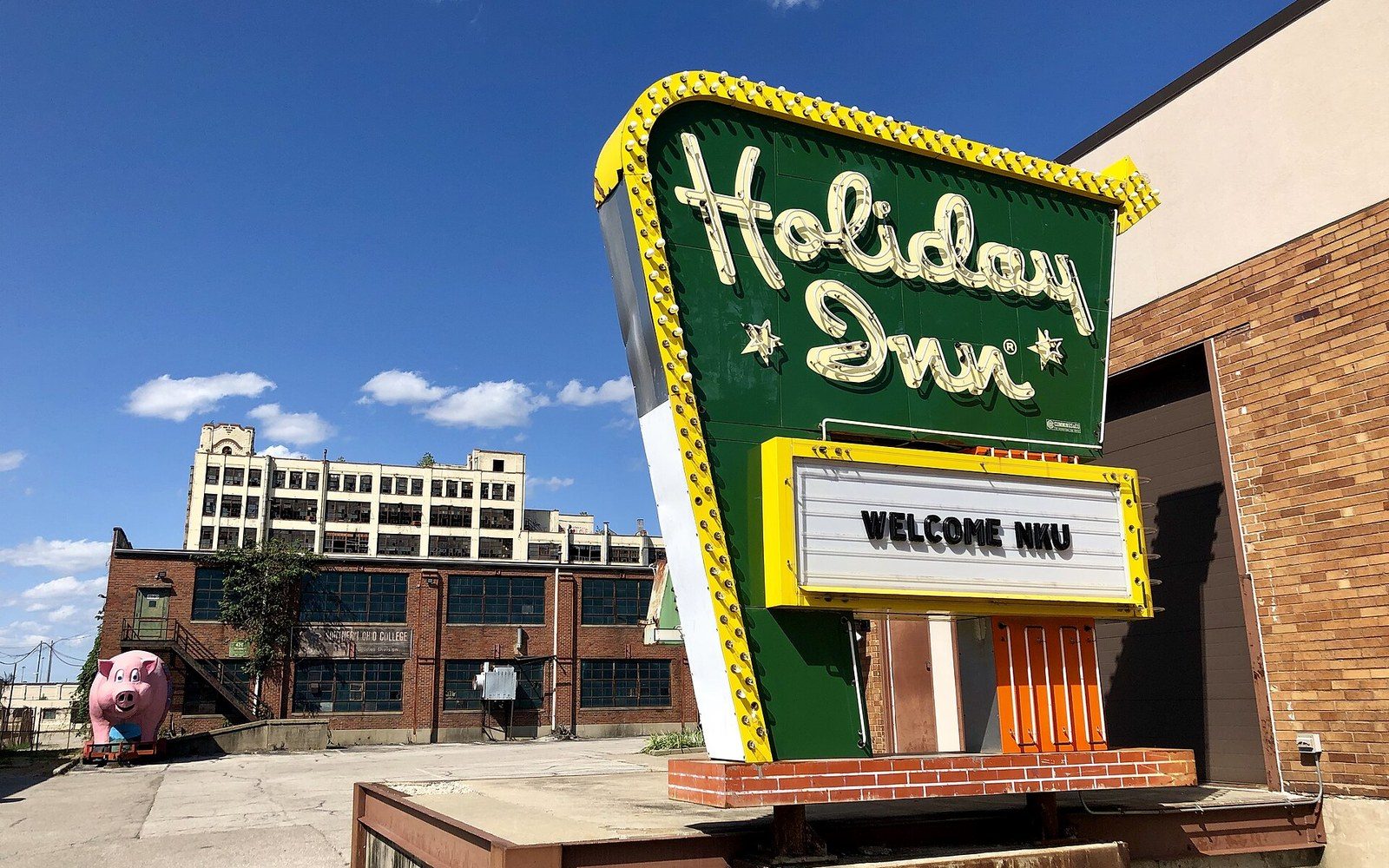
The American Sign Museum, founded by Tod Swormstedt in Cincinnati in 1999 and now housed in a 19,000-square-foot former factory in Camp Washington, ho
Photo: American Sign Museum, Camp Washington, Cincinnati, OH · Wikimedia CommonsA former trade-press editor turned a lifelong obsession into the largest documented collection of American commercial signage in the country.
From Trade Paper to Museum Floor
Tod Swormstedt spent decades editing Signs of the Times, the Cincinnati-based trade journal of the sign industry, and in doing so assembled something most editors never manage: a physical archive serious enough to become an institution. In 1999 he founded the American Sign Museum ↗ in Cincinnati, channelling years of industry contacts and collected objects into a nonprofit dedicated to the history and craft of commercial signage. The founding collection drew on pieces Swormstedt had gathered through the journal — trade samples, salvaged panels, neon tubes — that the industry itself had rarely thought worth keeping.
The museum occupied smaller quarters before settling into its current home: a 19,000-square-foot former factory building in Camp Washington, the near-west-side neighbourhood whose industrial fabric made it a natural fit for an institution built around manufacturing and craft. The space, renovated to accommodate the collection's scale, opened in its present form in 2012. Camp Washington is itself a neighbourhood defined by working trades — it lends the address a documentary honesty that a repurposed downtown loft could not.
A Walk Through Commercial Time
The museum's most effective curatorial decision is chronological. Visitors enter near hand-painted nineteenth-century trade signs — the carved and gilded wooden boards that hung above apothecaries, cobblers and dry-goods stores — and move forward through each successive technology. Porcelain enamel panels from the early twentieth century give way to the incandescent bulb signs of the 1920s and 1930s, then to neon, then to the backlit plastic channel letters that came to define roadside retail from the 1950s onward, with the walk closing somewhere in the neon-and-acrylic landscape of the 1980s.
Neon receives particular attention: the museum's neon collection ↗ spans bent-glass advertising pieces that were made by hand, one electrode at a time, by craftspeople whose trade overlapped as much with glassblowing as with electrical work. The chronological layout makes legible what a thematic arrangement would obscure — that commercial signage is a precise index of available materials, manufacturing technology and the visual expectations of each decade's street life.
Swormstedt's instinct, formed before historic-preservation bodies had developed any framework for protecting vernacular commercial objects, was simply that these things would disappear if nobody stopped them. In Camp Washington, they have not.
The space, renovated to accommodate the collection's scale, opened in its present form in 2012.
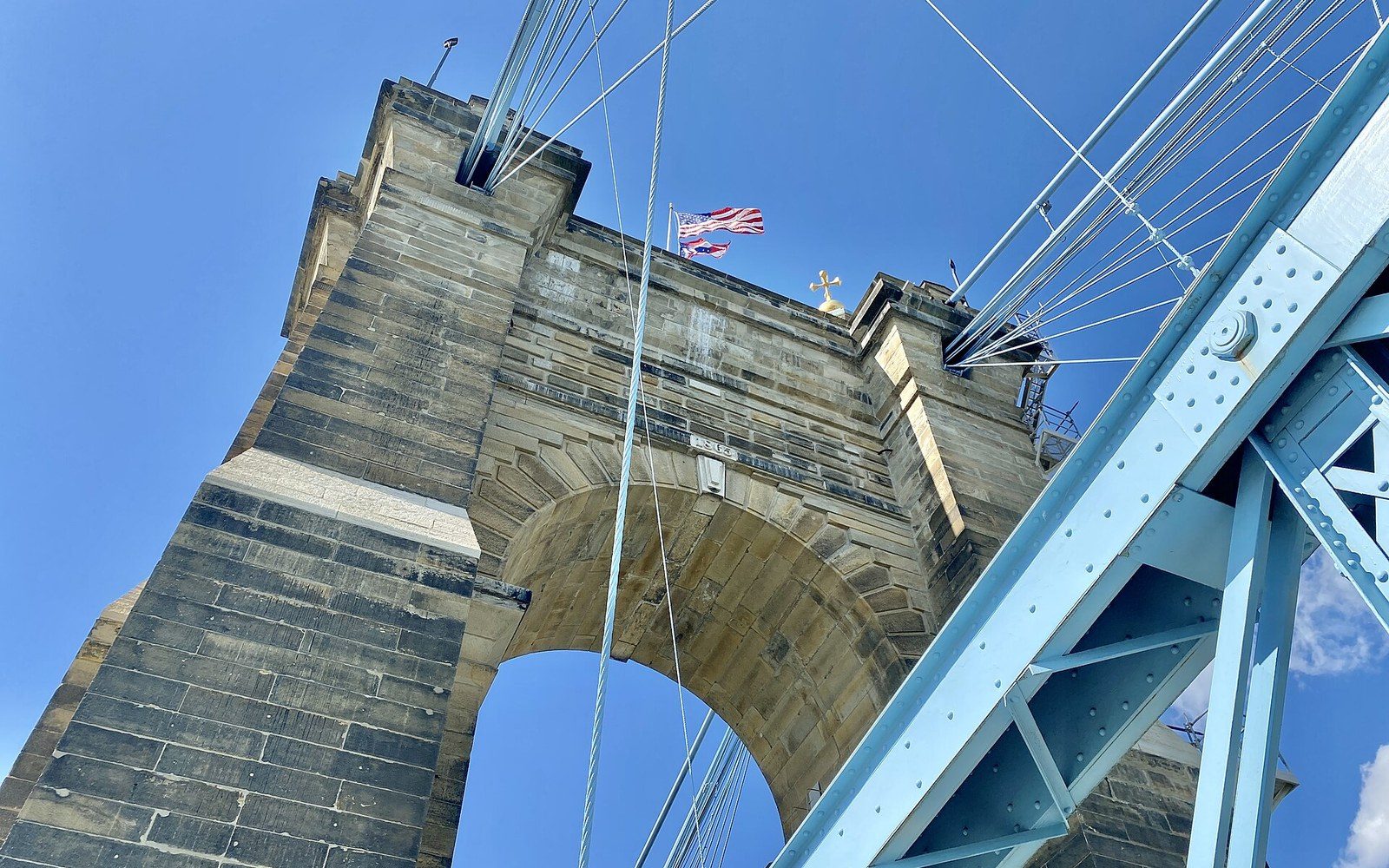
The Covington anchorage and approach to the Roebling Suspension Bridge present a different engineering reading from the Kentucky side — the Gothic tow From the Covington Anchorage, the Bridge Reads Differently
Photo: Roebling Bridge, Covington, KY - 52280197590 · Wikimedia CommonsFrom the record
Chronology
- 1999American Sign Museum founded by Tod Swormstedt in Cincinnati
- 2012museum opens in its current 19,000-square-foot Camp Washington building
More in Across the River