Section 6 of 6
Across the River
Covington and Newport, Kentucky — the south bank that Cincinnati built, used and could not quite annex.
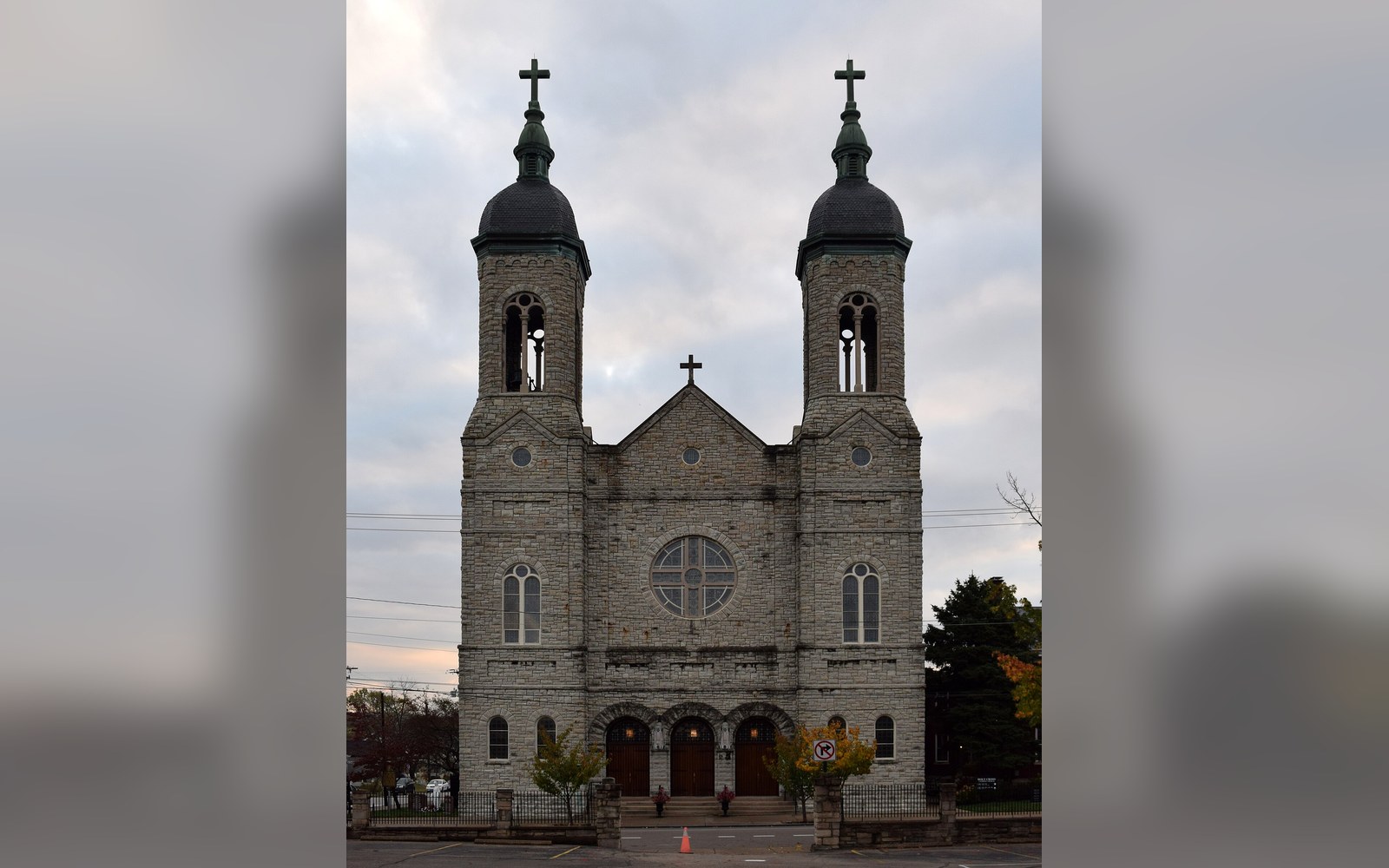
The Two Towns Cincinnati Needed on the Other Bank — the piece this section opens with.
Photo: Holy Cross Church (Covington, Kentucky) - facade · Wikimedia Commons4 pages in this section
- The Two Towns Cincinnati Needed on the Other BankCovington (platted 1814) and Newport (1795) grew as Kentucky counterparts to Cincinnati — processing industries, lower land costs and, before the bridges, ferry crossings that made them functionally part of the same city. Covers the economic relationship, the German and Irish settlement patterns and how the two cities' downtowns changed after the Roebling Bridge opened.
- From the Covington Anchorage, the Bridge Reads DifferentlyThe Covington anchorage and approach to the Roebling Suspension Bridge present a different engineering reading from the Kentucky side — the Gothic towers, the cable geometry and the original toll plaza approach. Covers the anchorage construction, the original toll structure and what the Kentucky approach reveals about Roebling's design that the Cincinnati side does not.
- Montgomery Inn at the Boathouse: the Ribs and the River, TogetherMontgomery Inn's Boathouse location on the Ohio riverfront in Cincinnati opened in 1989, extending a rib restaurant operation founded by Matilda Gracin in Montgomery, Ohio, in 1951; the piece covers the restaurant's documented history and its riverfront siting rather than its current menu.
- Tod Swormstedt Collected Signs Before Anyone Called It PreservationThe American Sign Museum, founded by Tod Swormstedt in Cincinnati in 1999 and now housed in a 19,000-square-foot former factory in Camp Washington, holds the largest documented collection of American commercial signage. Covers Swormstedt's founding collection, the Camp Washington building and the chronological layout that walks visitors from hand-painted nineteenth-century trade signs to 1980s neon.
The other five