Isaac Mayer Wise Wanted Minarets in Cincinnati
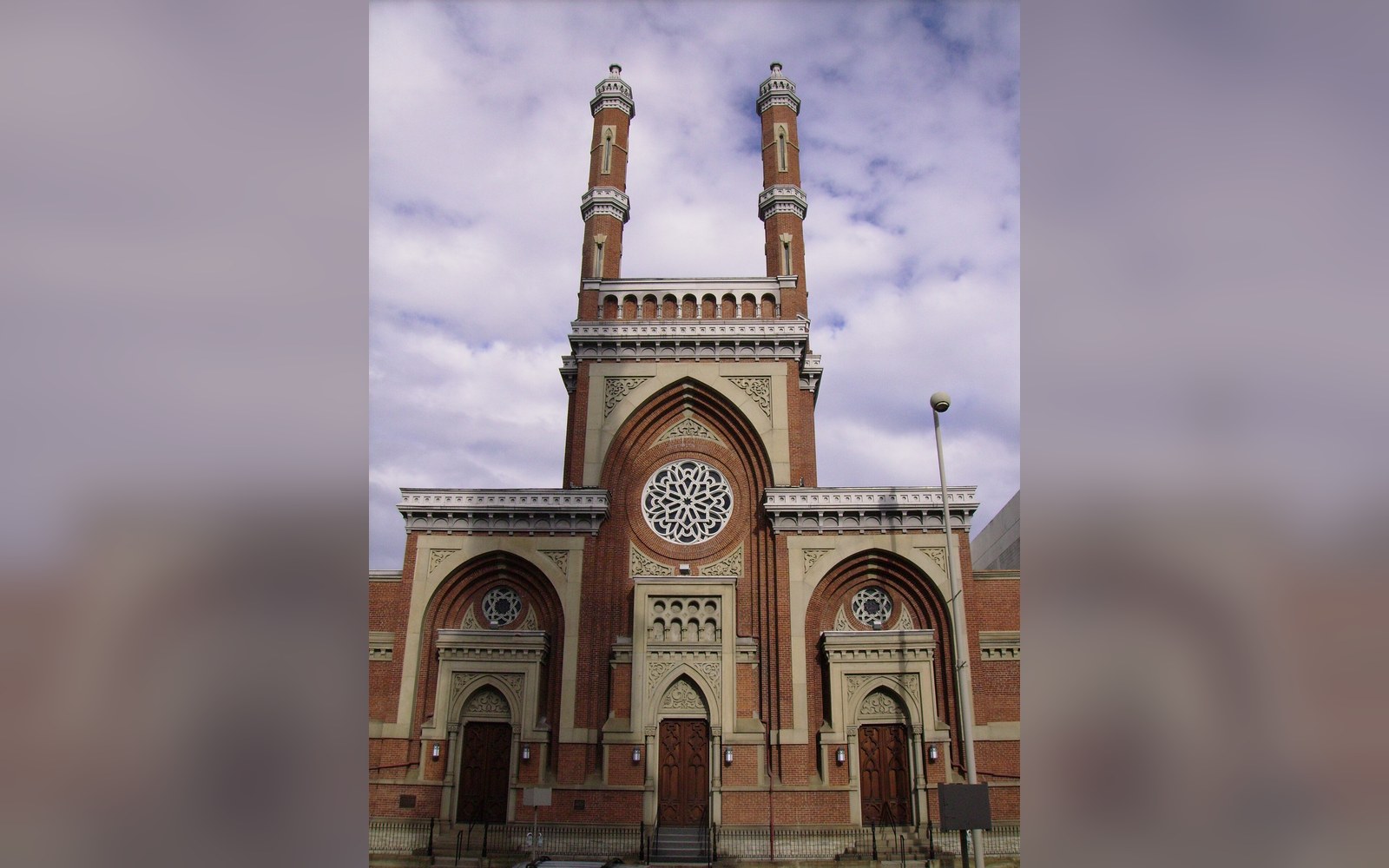
The Plum Street Temple, completed in 1866 to a James Keys Wilson design with Moorish Revival minarets, was commissioned by Rabbi Isaac Mayer Wise.
Photo: Plum Street Temple · Wikimedia CommonsA Moorish Revival synagogue on Plum Street, completed in 1866, still anchors the congregation that Wise made the institutional heart of American Reform Judaism.
A Rabbi's Architectural Argument
Isaac Mayer Wise arrived in Cincinnati in 1854 with a project larger than any single congregation: the systematic reform and unification of American Jewish practice. His pulpit was K.K. Bene Yeshurun, and when the congregation resolved to build a permanent home on Plum Street, Wise understood that the building itself would carry an argument. He commissioned architect James Keys Wilson, a Cincinnati practitioner whose portfolio ran to churches and civic work, and directed him toward the Moorish Revival — a style that had been sweeping across European synagogue design since the 1840s as a deliberate assertion of Jewish distinctiveness, drawing on Andalusian Islamic precedent rather than Christian Gothic.
Wilson's design, completed in 1866, delivered two octagonal minarets flanking a façade of horseshoe arches, polychrome brickwork and ornamental detail that owed more to the Alhambra than to anything else on Plum Street. Inside, the sanctuary continued the theme: striped arches, elaborate stencilling and a colour palette of red, blue and gold that read as emphatically non-Protestant at a moment when that distinction mattered. The Plum Street Temple has been listed on the National Register of Historic Places, a recognition of its architectural integrity as much as its congregational significance.
Wise used the building as the physical address of a movement. In 1873 he founded the Union of American Hebrew Congregations here, and in 1875 Hebrew Union College — the first permanent Jewish institution of higher learning in the Western Hemisphere — opened in Cincinnati under his leadership. The Hebrew Union College ↗ remains on Clifton Avenue today, still the principal seminary of Reform Judaism in North America. Together, the temple and the college gave Cincinnati a claim on the institutional origins of American Reform Judaism that no other city disputes.
The Hebrew Union College remains on Clifton Avenue today, still the principal seminary of Reform Judaism in North America.
K.K. Bene Yeshurun still holds services at the Plum Street Temple, making it one of the oldest continuously used synagogues in the United States. Wilson's minarets, improbable as they must have looked when they went up among the Italianate cornices of a mid-century Ohio city, have simply become part of what Plum Street looks like.
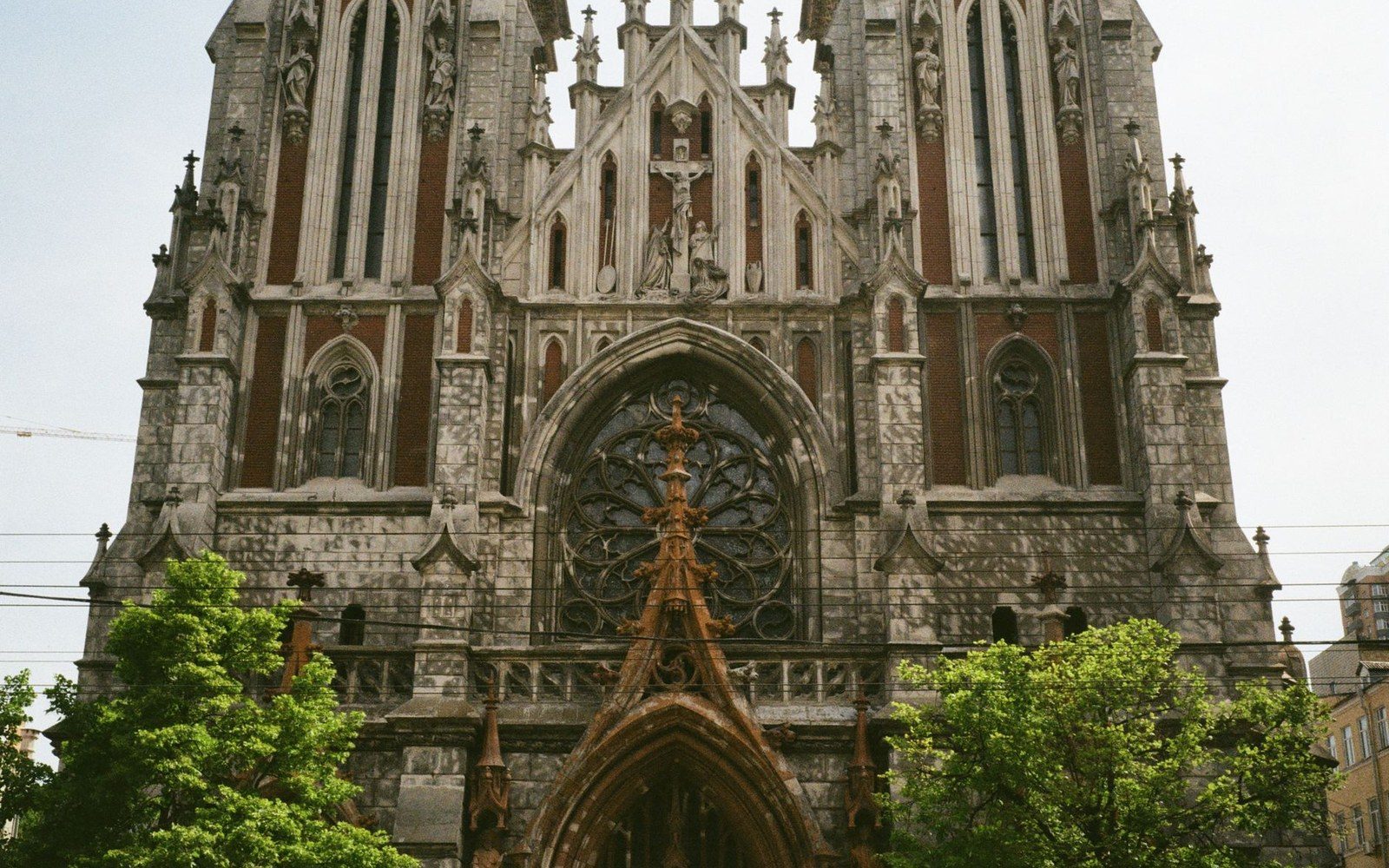
Cincinnati Music Hall, opened in 1878 to a Samuel Hannaford design in High Victorian Gothic, was threatened with demolition more than once.
Photo: Marharyta Volkova / PexelsFrom the record
Key dates
- 1854Isaac Mayer Wise becomes rabbi at K.K. Bene Yeshurun, Cincinnati
- 1866Plum Street Temple completed to James Keys Wilson's Moorish Revival design
- 1873Union of American Hebrew Congregations founded in Cincinnati
- 1875Hebrew Union College opens in Cincinnati
- 1975Temple listed on the National Register of Historic Places
More in Still Standing