Section 5 of 6
Still Standing
The buildings and institutions from the nineteenth century that are still in use — and what that survival cost.
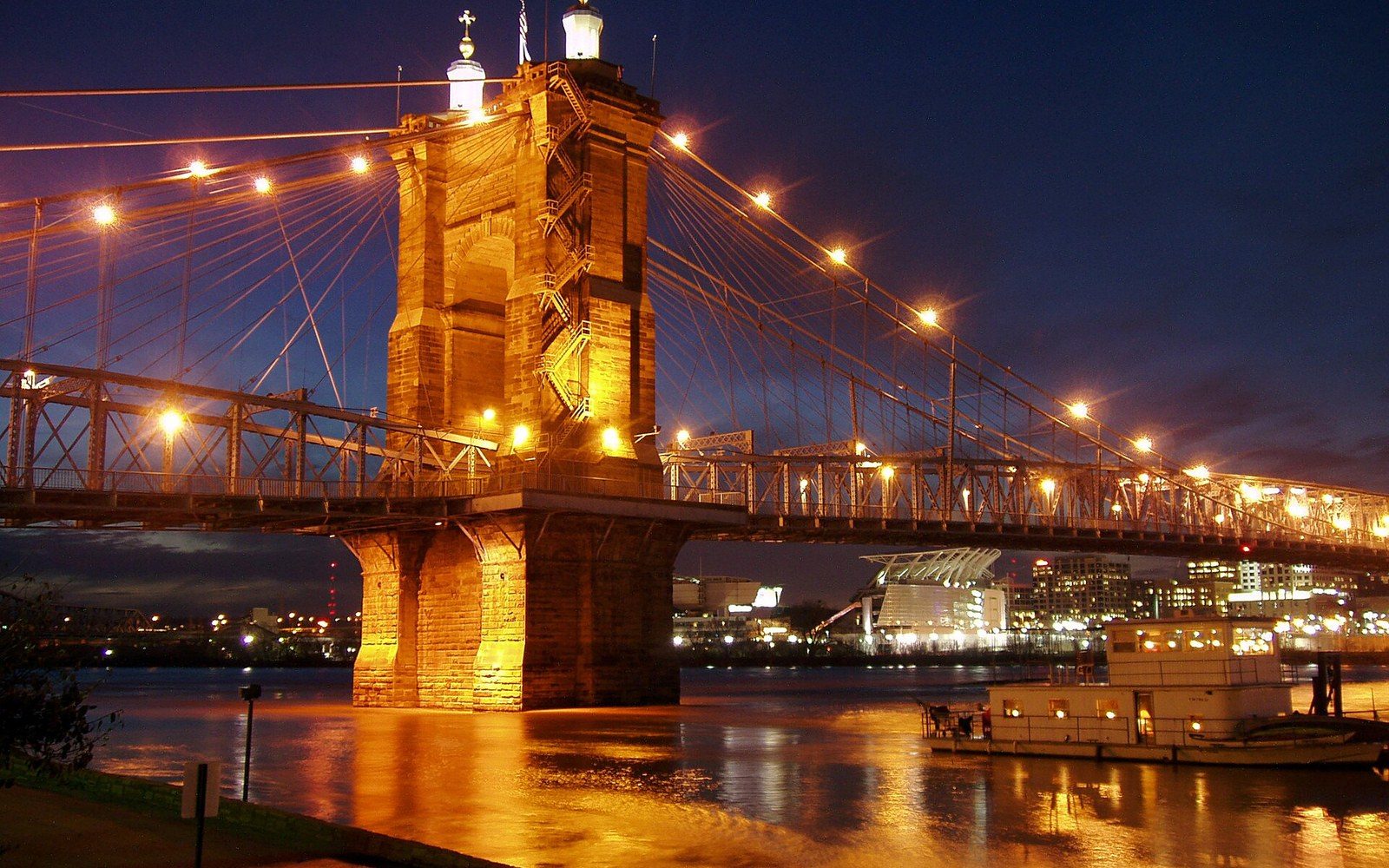
The Bridge Roebling Built Before He Built the Other One — the piece this section opens with.
Photo: Cincinnati-roebling-suspension-bridge · Wikimedia Commons5 pages in this section
- The Bridge Roebling Built Before He Built the Other OneJohn A. Roebling's Ohio River suspension bridge, completed in 1866 at a main span of 1,057 feet, was the longest suspension bridge in the world at opening and served as the direct engineering prototype for the Brooklyn Bridge. Covers the cable design, the 1866 opening, and the specific structural elements Roebling carried forward to Brooklyn.
- Music Hall: the Building the City Voted to Tear Down TwiceCincinnati Music Hall, opened in 1878 to a Samuel Hannaford design in High Victorian Gothic, was condemned and nearly demolished on at least two separate occasions before a 2017 restoration returned it to use. Covers the original May Festival commission, the two demolition campaigns, the rose window's survival and the 2017 restoration budget (approximately $143 million, as reported by the Cincinnati Symphony Orchestra, 2017).
- The Largest Nineteenth-Century Italianate District in the CountryOver-the-Rhine's roughly 900-block stock of Italianate and Italianate-Romanesque buildings constitutes what the National Register nomination (2003) called the largest such intact district in the United States. Covers the German immigrant settlement that built it, the canal that gave the neighbourhood its name and the cornice-bracket vocabulary that unifies the streetscape.
- Isaac Mayer Wise Wanted Minarets in CincinnatiThe Plum Street Temple, completed in 1866 to a James Keys Wilson design with Moorish Revival minarets, was commissioned by Rabbi Isaac Mayer Wise as the home of American Reform Judaism's central congregation, K.K. Bene Yeshurun. Covers Wise's theological project, Wilson's design sources and the building's status as one of the oldest continuously used synagogues in the United States.
- The Genius of Water Has Been on Fountain Square Since 1871The Tyler Davidson Fountain, cast in Munich by August von Kreling and installed on what became Fountain Square in 1871, depicts the Genius of Water — a female figure with arms raised, water spraying from her hands and from figures below. Covers the commission by Henry Probasco in memory of his brother-in-law Tyler Davidson, von Kreling's design and the three times the fountain has been relocated within the square.
The other five