Barney Kroger's Single Rule: Never Sell What You Can Make
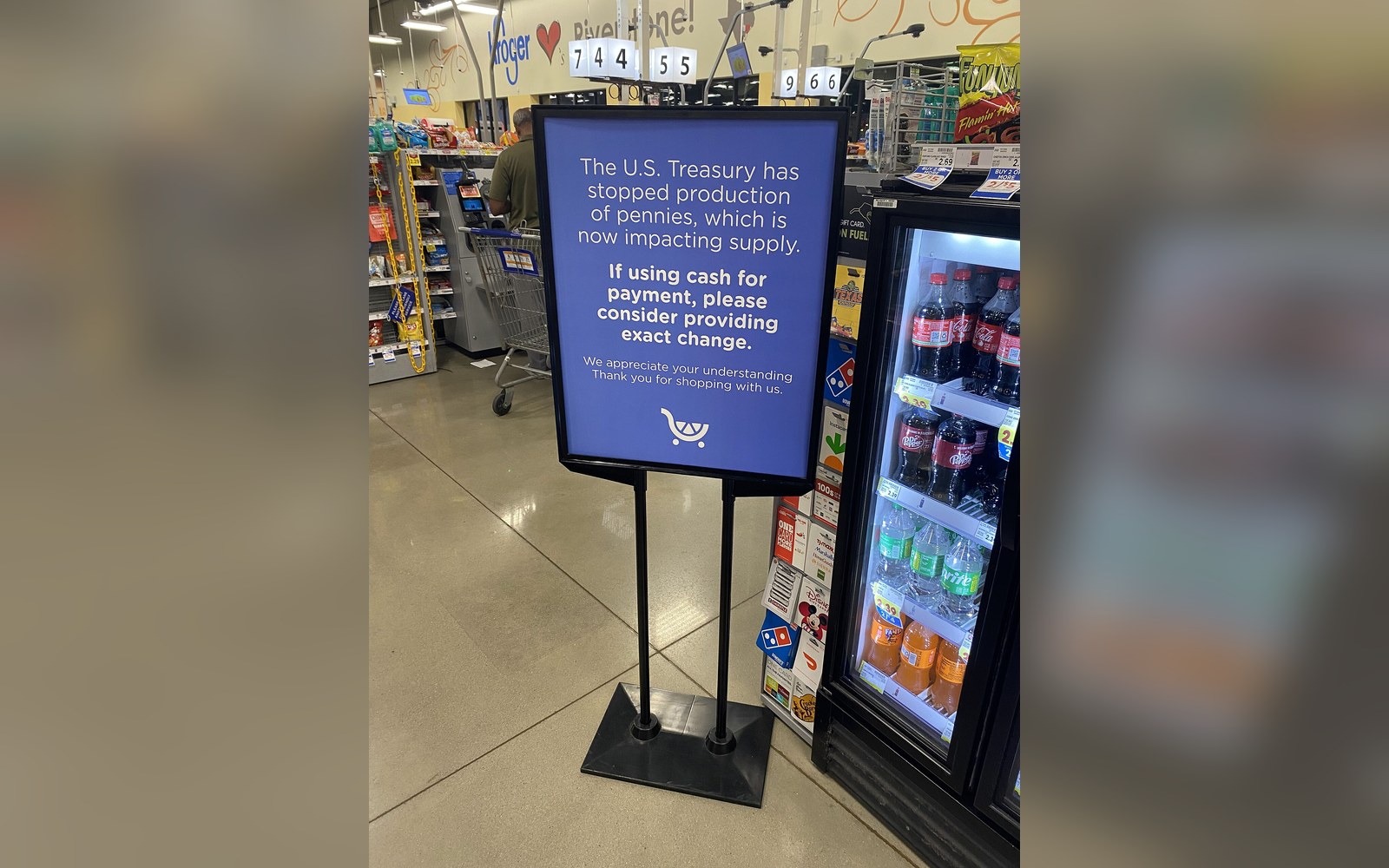
Barney Kroger opened his first grocery on Pearl Street in Cincinnati in 1883 with $372 borrowed capital and one operational principle — own the bakery behind the shop.
Photo: Kroger store penny circulation · Wikimedia CommonsA $372 stake on Pearl Street and the conviction that a grocer who bakes his own bread answers to nobody
From Pearl Street to Vine
Barney Kroger was twenty-three years old in 1883 when he borrowed $372 and opened the Great Western Tea Company at 66 Pearl Street in Cincinnati. The money came in part from a business partner, B.A. Branagan, who within the year had sold his stake back and disappeared from the record. Kroger stayed, and the rule he built on was simple enough to fit on a receipt: never sell something you can manufacture yourself.
The bakery came early. Rather than buying bread from a wholesaler and marking it up, Kroger installed his own baking operation behind the retail counter, a step that collapsed the middleman's margin and let him price below competitors without shrinking his own. The logic extended outward — coffee-roasting, meat preparation, whatever the shop could absorb — and it established the pattern that would define the company's growth for the next century.
By 1902, nineteen years after Pearl Street, Kroger had expanded to forty stores and moved the company's nerve centre to 1014 Vine Street ↗, deep in the commercial core of what would later be recognised as one of the densest concentrations of nineteenth-century Italianate architecture in the country. Vine Street connected the basin's retail district to Over-the-Rhine, and a grocer on that corridor was positioned at the artery of daily life for tens of thousands of Cincinnati residents. The same year, the company formally incorporated as the Kroger Grocery and Baking Company — the word Baking in the legal name signalling that the founding principle was not incidental but constitutional.
Branagan, who within the year had sold his stake back and disappeared from the record.
Kroger's Cincinnati was also the Cincinnati of Findlay Market : a city that had grown its food economy around public market halls, immigrant butchers and small producers. Working against that grain required consistent undercutting on price and consistent reliability on freshness, and the vertical integration made both possible. When Kroger retired in 1928, the chain counted more than five thousand stores across the United States, making it by that point one of the largest grocery operations in the country ↗.
The headquarters remained in Cincinnati. The company, now formally the Kroger Co., still operates from the city, the largest private employer in the region and the second-largest supermarket chain in the United States by revenue as of recent filings.
Pearl Street no longer holds the original storefront. The address belongs to a changed streetscape, the building gone. What remains is the ledger logic Kroger committed to in 1883 — still written into how the company accounts for what it owns.
Tom and John Kiradjieff opened Empress Chili in 1922 near the Empress Burlesque theatre, serving a Macedonian-spiced meat sauce over spaghetti.
Photo: Alberta Studios / PexelsFrom the record
Chronology
- 1883Great Western Tea Company opens at 66 Pearl Street with $372 in borrowed capital
- 1884 (approx.)co-founder B.A. Branagan sells his stake; Kroger continues alone
- 1902company expands to forty stores; headquarters established at 1014 Vine Street
- 1902formally incorporated as the Kroger Grocery and Baking Company
- 1928Barney Kroger retires; chain at more than five thousand U.S. locations
From the record
Key figures
- $372Kroger's starting capital, 1883
- 40stores in operation by 1902
- 5,000+stores at Kroger's retirement in 1928
More in Porkopolis