What the German Butchers Did with the Pin Oats

Goetta — pork and beef bound with steel-cut oats, sliced and pan-fried — arrived with Cincinnati's nineteenth-century German immigrant population.
Photo: RDNE Stock project / PexelsA breakfast meat that never left home
Goetta — pork and beef bound with steel-cut pin oats, pressed into a loaf, sliced thick and pan-fried until the cut face crisps — is one of the more geographically stubborn foods in the American Midwest. Outside the Cincinnati metropolitan area, which includes the Kentucky bank at Covington and Newport, it is almost unknown. Inside it, the dish has been a fixture of German-descended household cooking since the mid-nineteenth century.
The word comes from the Low German Grütze tradition of grain-extended meat, a practical category of food that stretched expensive protein with cheaper bulk. German immigrants arriving in Cincinnati from the 1830s onward — many of them settling in Over-the-Rhine, the dense neighbourhood north of the canal — brought the habit with them and adapted it to local ingredients. Pin oats, coarser than rolled oats and slower-cooking, gave the finished loaf a texture that held together in the pan without going gluey. Pork was cheap in a city that had made its name on hog slaughter; the dish fit naturally into the butcher-shop economy of a place already called Porkopolis.
For most of its Cincinnati life, goetta was a home and butcher-shop product. Individual German immigrant families made it; neighbourhood meat markets sold their own versions. The recipe varied block by block — ratios of pork to beef, the addition of onion or bay leaf, the firmness of the set — and no single version dominated. That neighbourhood specificity is part of why it never travelled: there was no canonical recipe to export, and no commercial infrastructure behind it.
Inside it, the dish has been a fixture of German-descended household cooking since the mid-nineteenth century.
That changed in 1946 when Glier's Meats ↗, operating out of Covington, Kentucky, began producing goetta at commercial scale. Robert Glier's operation standardized the product enough to stock grocery cases across the metro area while keeping the pin-oat structure that defines the dish. Glier's remains the dominant commercial producer, and the company estimates it sells several million pounds annually to a market concentrated almost entirely within a roughly fifty-mile radius of Cincinnati.
The dish has attracted academic attention as a regional food marker ↗, with food historians noting that its failure to spread mirrors the insularity of the German working-class neighbourhoods that produced it. Cincinnati's German community was large enough to sustain its own culinary vocabulary — goetta, alongside the breakfast meat traditions of Findlay Market — without needing outside validation, and the food simply never acquired one.
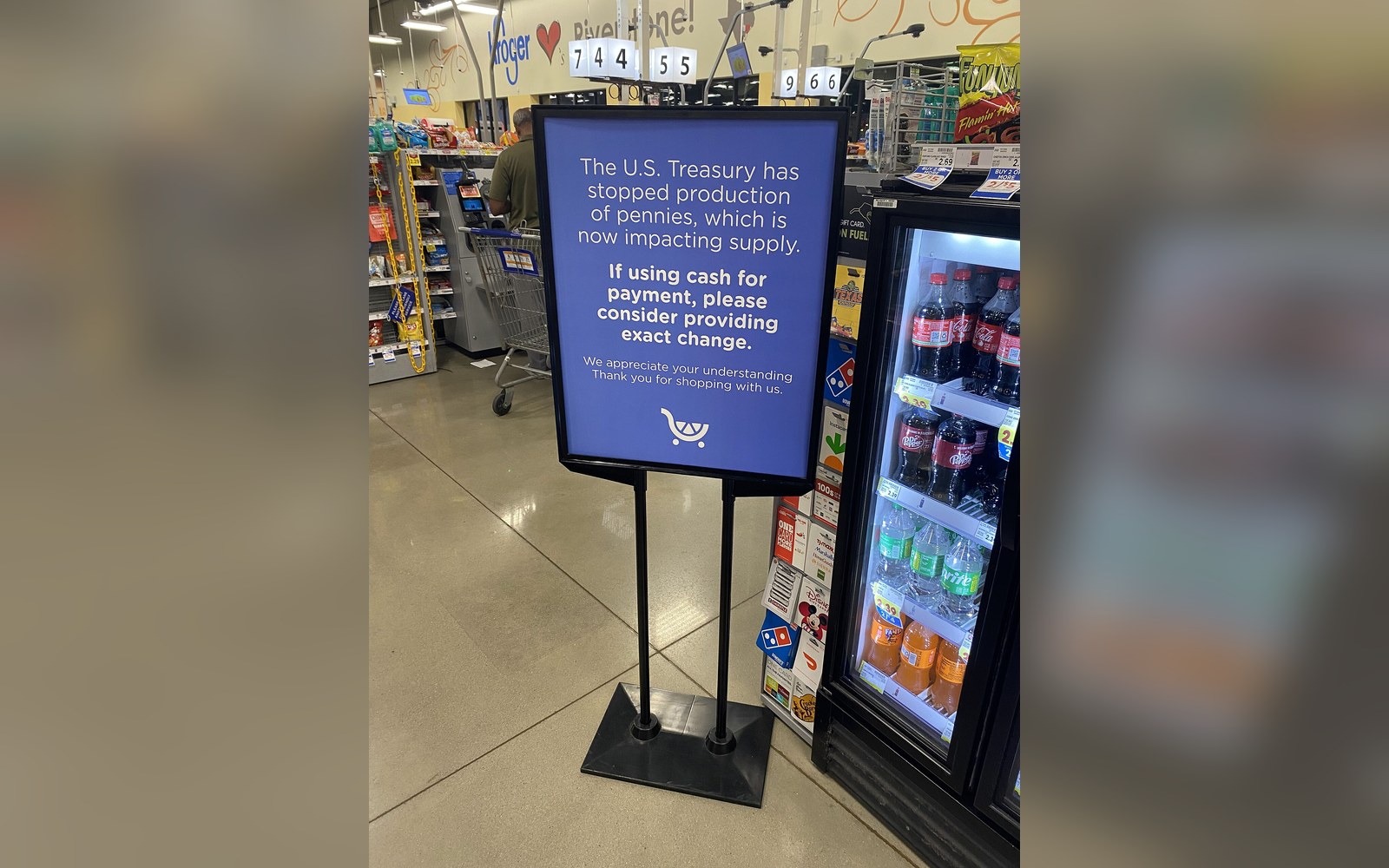
Barney Kroger opened his first grocery on Pearl Street in Cincinnati in 1883 with $372 borrowed capital and one operational principle — own the bakery behind the shop. Barney Kroger's Single Rule: Never Sell What You Can Make
Photo: Kroger store penny circulation · Wikimedia CommonsFrom the record
Chronology
- 1830s onwardGerman immigrants settle Over-the-Rhine; domestic goetta production established
- 1946Glier's Meats, Covington, begins commercial production
From the record
What makes it goetta
- Pin oatssteel-cut oats, coarser than rolled; hold structure through pan-frying
- Standard mixpork and beef, with onion and bay leaf common additions
- Formpressed loaf, sliced and fried until the cut face crisps
More in Porkopolis