Lager in the Basin: the Breweries the Eighteenth Amendment Finished
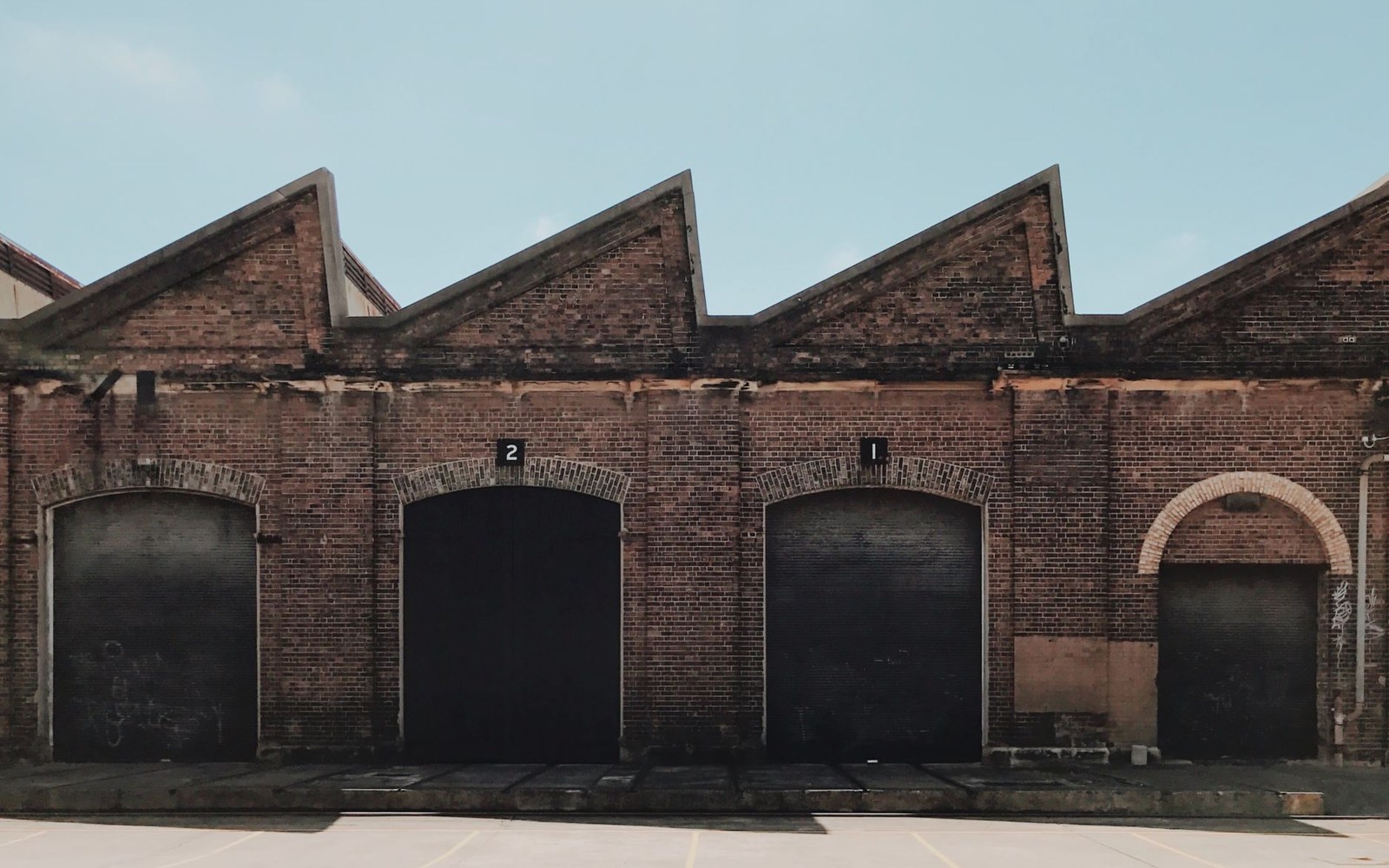
By 1890 Cincinnati had more than thirty breweries, the largest being Christian Moerlein's on Elm Street;
Photo: Gilberto Olimpio / PexelsBy 1890 Cincinnati counted more than thirty breweries; one constitutional amendment reduced that number to nearly zero.
From German Cellars to Industrial Scale
The lager tradition in Cincinnati grew directly from the German immigration wave that transformed Over-the-Rhine between roughly 1840 and 1880. Bavarian and Rhine-country brewers brought with them bottom-fermenting lager yeast and the patience to cold-condition beer for weeks rather than days. The basin's limestone geology helped: caves cut into the hillsides below Mount Adams and the bluffs north of the canal provided natural cold storage before mechanical refrigeration existed, and the Ohio River supplied the ice that extended the season.
Christian Moerlein arrived in Cincinnati from Bavaria in 1841, worked first as a blacksmith, and opened a brewery on Elm Street in Over-the-Rhine in 1853. By the 1870s his operation had become the largest in the city and one of the largest in the United States, exporting to South America and Europe under a label that advertised its purity specifically because Cincinnati's water was already drawing suspicion from public-health observers. Moerlein's enterprise occupied an entire city block, with the bottling works, malt house and lagering cellars integrated into a single industrial campus — the kind of vertical consolidation that later defined Gilded Age manufacturing elsewhere in American industry.
The Hudepohl Brewing Company, founded in 1885 by Ludwig Hudepohl and George Kotte on the riverbank south of the canal, grew along a different model: it remained a regional operation aimed squarely at the Cincinnati market rather than the export trade. That local orientation would prove consequential thirty-five years later.
Bavarian and Rhine-country brewers brought with them bottom-fermenting lager yeast and the patience to cold-condition beer for weeks rather than days.
What the Eighteenth Amendment Destroyed
The Volstead Act took effect in January 1920, and Cincinnati's brewing industry collapsed with unusual speed. Moerlein had already died in 1897; his company had passed through corporate reorganisation and was not positioned to survive the transition. Some breweries pivoted to near beer, ice manufacture or soft drinks. Most simply closed. The physical infrastructure — the lagering tunnels, the malt floors, the bottle-washing lines — was either repurposed, stripped or left to deteriorate.
Hudepohl ↗ survived the Prohibition years by producing non-alcoholic malt beverages and resumed full brewing operations after Repeal in 1933, emerging as one of only two Cincinnati breweries of any commercial scale to continue operating into the post-war decades. The other was Schoenling, founded in 1934 specifically to fill the vacuum Repeal created. Between them, Hudepohl and Schoenling defined Cincinnati's brewing identity for the next half-century: workmanlike lagers, local loyalty and a market too small to interest national consolidators until it wasn't. The two companies merged in 1986, and the combined operation eventually wound down in 1997, leaving Cincinnati without a significant commercial brewery for the first time in nearly 150 years.
Elm Street Again
The craft brewing movement reached Cincinnati in earnest in the early 2010s. In 2013, Bryant Goulding and Bob Bonder opened Rhinegeist Brewery ↗ in the former Moerlein bottling plant on Elm Street — the same building complex where Moerlein's export lagers had been packaged for the South American trade. The space is a nineteenth-century industrial structure of the type Over-the-Rhine preservationists had been fighting to hold together for decades: brick piers, timber framing, sawtooth skylights. Rhinegeist retained the bones and added fermentation tanks visible from a taproom occupying the upper floor.
The name is German for Rhine ghost — a deliberate invocation of the brewing tradition the Eighteenth Amendment had interrupted. By the mid-2010s Rhinegeist had become one of the fastest-growing craft breweries in the Midwest by volume, a fact that would have struck Christian Moerlein as logical given the building's history and somewhat ironic given the intervening century. The Christian Moerlein brand itself had been revived separately in the 1980s and again in the 2000s, operating out of a different facility, trading on a name that outlasted every institutional structure built around it.
What the lager brewers of Over-the-Rhine constructed in the basin between 1853 and 1920 was not just a product but an urban infrastructure — tunnels, cellars, malt floors, bottling works — most of which is gone. What remains is one repurposed bottling plant on Elm Street and a vocabulary of German-derived names the city never quite put down.
Barney Kroger opened his first grocery on Pearl Street in Cincinnati in 1883 with $372 borrowed capital and one operational principle — own the bakery behind the shop. Barney Kroger's Single Rule: Never Sell What You Can Make
Photo: Kroger store penny circulation · Wikimedia CommonsFrom the record
Chronology
- 1841Christian Moerlein arrives in Cincinnati from Bavaria
- 1853Moerlein opens brewery on Elm Street, Over-the-Rhine
- 1885Hudepohl Brewing Company founded by Ludwig Hudepohl and George Kotte
- 1897Moerlein dies; company enters corporate reorganisation
- January 1920Volstead Act takes effect; Cincinnati's brewery industry collapses
- 1933Repeal of Prohibition; Hudepohl resumes full operations
- 1934Schoenling founded to fill post-Repeal vacuum
- 1986Hudepohl and Schoenling merge
- 1997Merged operation winds down; Cincinnati left without major commercial brewery
- 2013Rhinegeist opens in former Moerlein bottling plant, Elm Street
From the record
Key terms
- Lagerbottom-fermented beer cold-conditioned for weeks; the dominant style among Cincinnati's German immigrant brewers
- Volstead Actthe 1919 legislation implementing the Eighteenth Amendment's Prohibition
- Near beerlow-alcohol malt beverage produced by breweries during Prohibition as a legal substitute
- Rhine ghostEnglish translation of Rhinegeist, the name chosen by the 2013 brewery for its address in the old Moerlein complex
More in Porkopolis