The First Team That Admitted It Was Paying Everyone
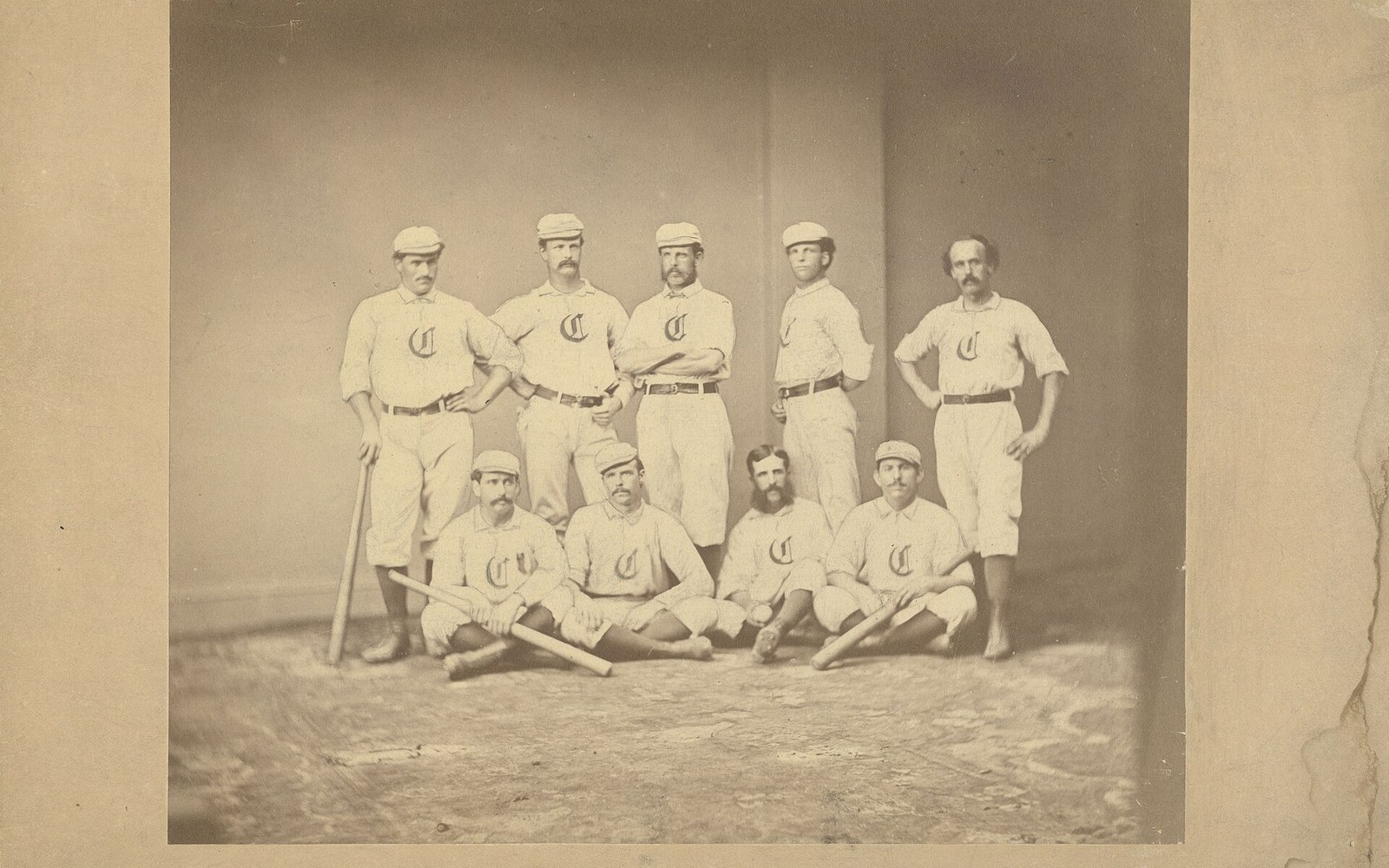
The 1869 Cincinnati Red Stockings were the first openly all-professional baseball club, going undefeated through 57 games under Harry Wright.
Photo: Cincinnati Red Stockings, 1869 - DPLA - a61b113d0e78e3c1fc904330bb2fcbed · Wikimedia CommonsIn 1869 the Cincinnati Red Stockings announced a salary for every man on the roster — and then went undefeated for fifty-seven games.
A Payroll Made Public
Amateur baseball clubs had been paying players for years before the Red Stockings made the practice official. The difference in 1869 was transparency: team president Aaron Champion and manager Harry Wright drew up contracts, published the terms, and dared anyone to object. Wright himself, a former cricket professional from England who had played for the Cincinnati club since 1865, signed for $1,200 for the season. His younger brother George, the shortstop and finest hitter on the squad, earned $1,400 — the highest salary on the roster ↗. The remaining players received amounts ranging from $600 to $1,100, each listed against his name. The National Association of Base Ball Players technically banned paid play; the Red Stockings answered by simply fielding a better team.
Wright recruited across the country. Only one man in the starting nine, Charlie Gould at first base, was actually from Cincinnati. The rest came from New York, New Jersey and Washington, assembled with the deliberateness of a modern franchise. Wright played centre field and handled the pitching rotation alongside Asa Brainard, whose underhand deliveries dominated the era's rules. The infield around George Wright was fast and polished; the outfield covered ground that looser amateur clubs routinely surrendered.
Fifty-Seven Without a Loss
The 1869 season began in May and carried the Red Stockings on a cross-country tour that reached California by September — an extraordinary logistical effort ↗ when the transcontinental railroad had been open only a few months. They played in San Francisco, Sacramento, and through a string of Midwestern cities on the return leg, defeating every opponent they met. The margins were sometimes narrow; they were never beaten. Final records of the era involve disputed exhibition games, and historians have counted slightly different totals depending on which contests are classified as official matches, but no serious historian places the undefeated run at fewer than fifty-seven games through the entire 1869 season.
The tour was as much spectacle as sport. Newspapers from New York to San Francisco covered the scores. Crowds came not only to watch baseball but to see what a professional, purpose-built club actually looked like against their local nines. The Red Stockings usually told them clearly. Scores of 50–7 and 103–8 were not rare; the team outscored opponents by a combined total that would look implausible in any other era.
Brooklyn Ends It
The streak carried into 1870 before it finally broke. On 14 June 1870, at the Capitoline Grounds in Brooklyn, the Brooklyn Atlantics beat the Red Stockings 8–7 in eleven innings. The game had been tied at the end of nine, and Cincinnati's own captain proposed calling it a draw; the Atlantics declined, played on, and won. The loss drew as much press coverage as most of the victories ↗ had. The Red Stockings' official unbeaten run, counting across both seasons, stood at either eighty-one or eighty-four games depending on the classification criteria used — the debate still occupies baseball historians.
The professional experiment that grew from Cincinnati's candid payroll outlasted the Red Stockings themselves. The club disbanded after the 1870 season when gate receipts fell and the Cincinnati press turned against the imported roster. But the model held: the National Association, the first professional league, formed in 1871, and Harry Wright moved to Boston to build a new dynasty there. The Reds name returned to Cincinnati permanently in 1882 and never left.
What the 1869 team had proved was not that professionals played better baseball than amateurs — everyone in the sport already knew that. What they proved was that you could say so out loud.
Wright himself, a former cricket professional from England who had played for the Cincinnati club since 1865, signed for $1,200 for the season.
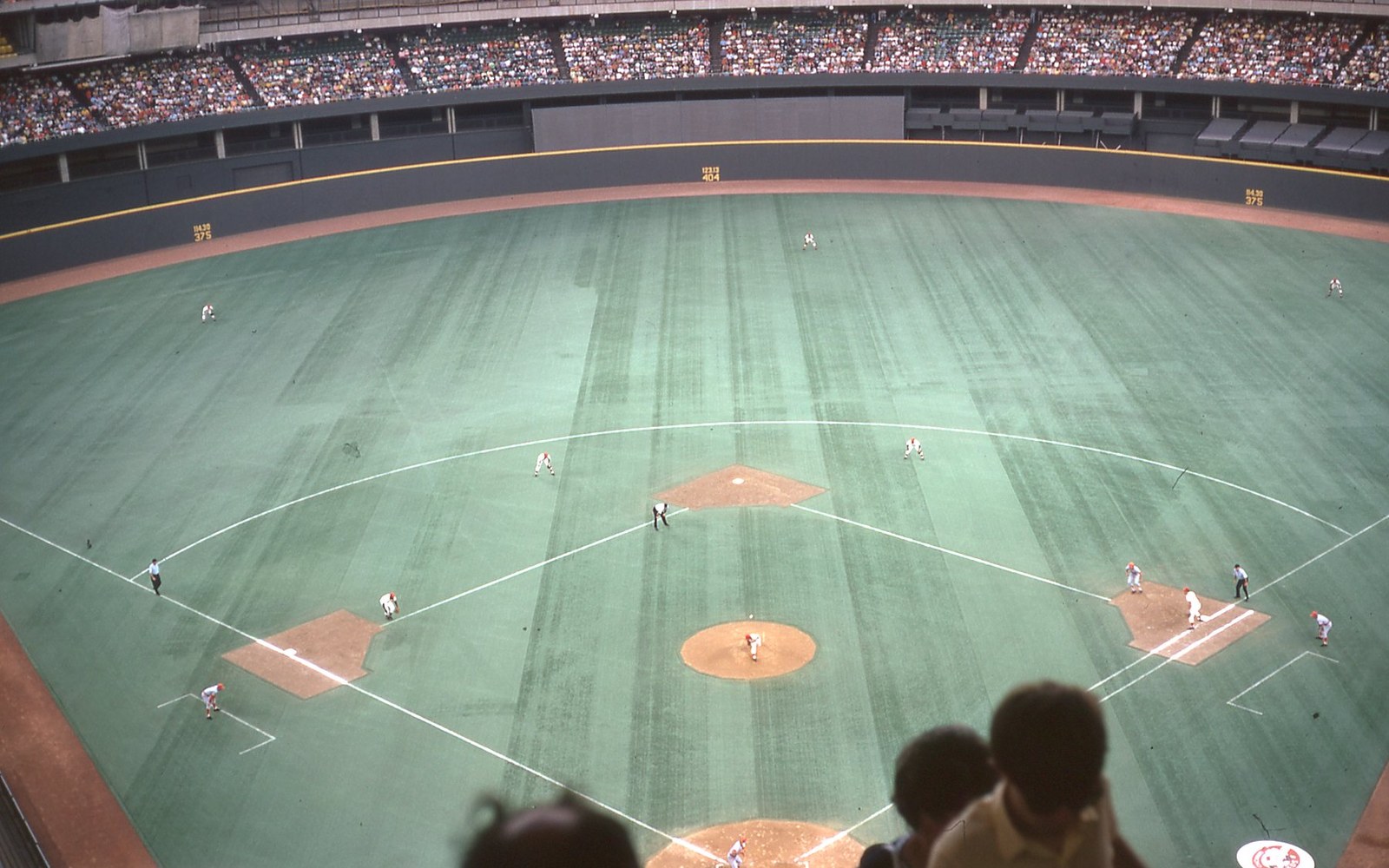
The Cincinnati Reds teams of 1970–1976 — the Big Red Machine — won back-to-back World Series in 1975 and 1976 at Riverfront Stadium. Riverfront Stadium, 1970–76: What the Machine Actually Was
Photo: Riverfront Stadium Cincinnati Ohio 1974 · Wikimedia CommonsFrom the record
Key figures and their roles
- Harry Wrightmanager and centre fielder; recruited the roster; paid $1,200 for 1869 season
- George Wrightshortstop; highest-paid player at $1,400; regarded as the team's best player
- Aaron Championclub president; authorised the open-salary model
- Asa Brainardprimary pitcher; underhand delivery under the era's pitching rules
- Charlie Gouldfirst baseman; the only Cincinnati-born starter in the nine
From the record
Season record context
- 57 gamesconservative count of official undefeated games in 1869 alone
- 81–84 gamesdisputed total of the unbeaten run across 1869 and into 1870
- 14 June 1870date of the loss to the Brooklyn Atlantics, Capitoline Grounds, Brooklyn; final score 8–7 in eleven innings
More in Queen City