Riverfront Stadium, 1970–76: What the Machine Actually Was
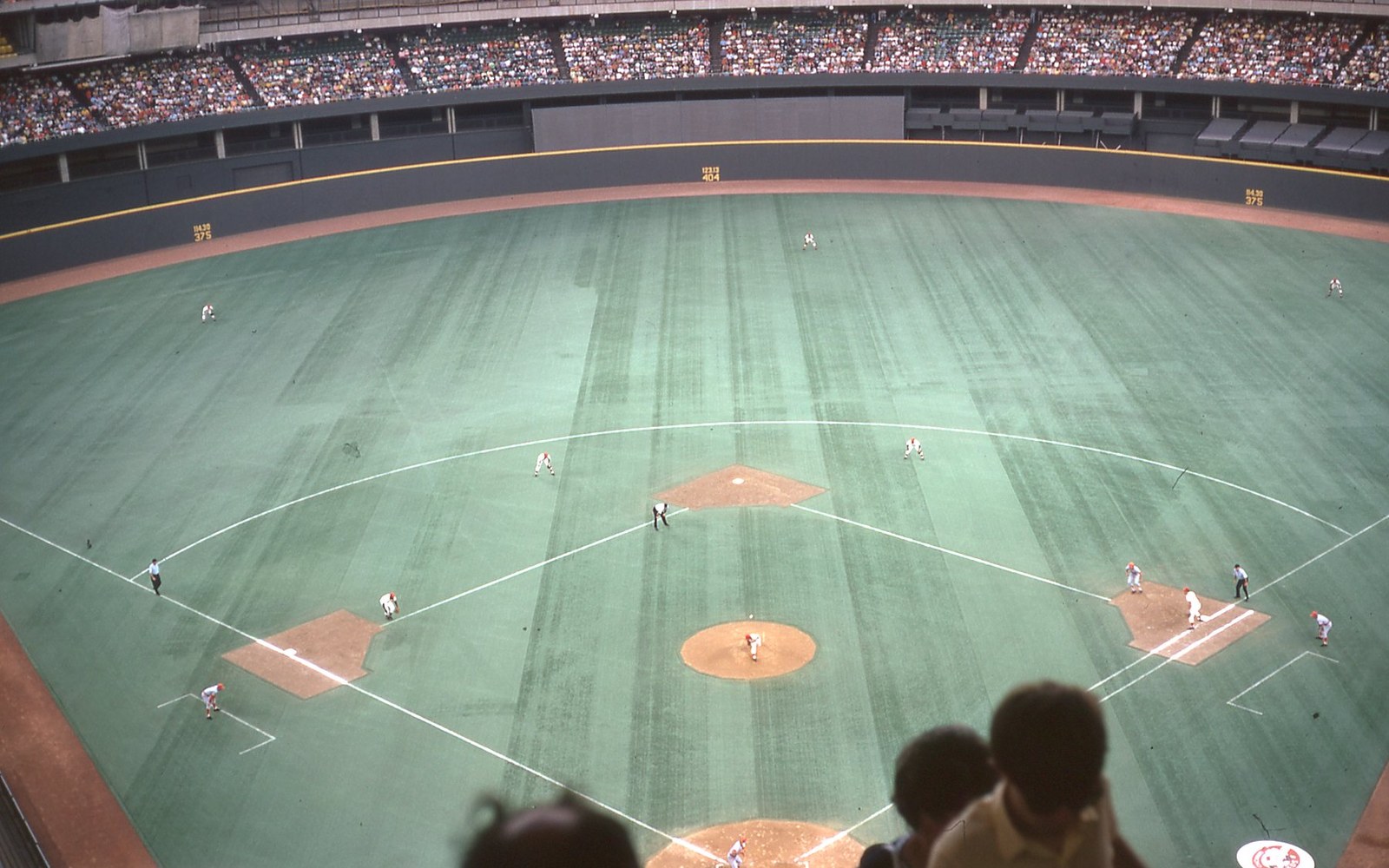
The Cincinnati Reds teams of 1970–1976 — the Big Red Machine — won back-to-back World Series in 1975 and 1976 at Riverfront Stadium.
Photo: Riverfront Stadium Cincinnati Ohio 1974 · Wikimedia CommonsThe club that defined an era played on carpet, in a concrete bowl, and won everything anyway.
The Stadium They Moved Into
Riverfront Stadium opened on June 30, 1970, on a cleared stretch of Cincinnati's Ohio River bank, replacing the intimacy of Crosley Field with a symmetrical, multipurpose bowl capable of seating more than 52,000. The design — shared in template with stadiums built the same decade in Pittsburgh, Philadelphia and Atlanta — prioritized capacity and dual use over character. Artificial turf replaced grass ↗, shaving grounders into singles through the infield at a pace that rewarded contact hitters and aggressive baserunning. The Reds' front office and manager Sparky Anderson, who took the job in 1970, built a roster that could exploit exactly that surface.
What the Roster Actually Was
The term "Big Red Machine" was coined by sportswriters in the early 1970s to describe a lineup of unusual depth and consistency. At its core: Johnny Bench behind the plate, widely regarded as among the finest catchers in the sport's history by any statistical measure the period recorded. Tony Pérez at first base supplied the reliable run production that held the middle of the order together through the full span. Joe Morgan, acquired from Houston before the 1972 season, brought on-base discipline and stolen-base production that changed how the club scored. Ken Griffey Sr., Dave Concepción, and Cesar Gerónimo completed an everyday unit whose collective efficiency showed in division titles in 1970, 1972, 1973, 1975 and 1976, with World Series appearances in 1970, 1972, 1975 and 1976.
Pete Rose is the figure the period returns to most insistently, and the documented record supports why. Playing left field, right field and — by 1975 — third base as directed, Rose led the team in plate appearances across multiple seasons ↗ and batted above .300 in each of the championship years. His 1973 National League Most Valuable Player Award came in a season the Reds did not win the Series; the recognition was individual rather than circumstantial. The 1975 World Series, a seven-game contest against the Boston Red Sox, produced Game 6 at Fenway Park — a game whose extra-inning conclusion is among the most documented single nights in the sport's broadcast history. Rose was named the Series MVP that year.
The 1976 club swept the New York Yankees in four games, completing back-to-back championships. No other National League team repeated as champion for decades afterward.
The Reds' front office and manager Sparky Anderson, who took the job in 1970, built a roster that could exploit exactly that surface.
The Stadium as Context
Riverfront's artificial surface and symmetrical dimensions — 330 feet down both lines, 404 feet to center — were not incidental. They shaped the kind of baseball the Reds played. Speed mattered. Contact mattered. The same turf that accelerated grounders also required outfielders to cover wider angles, favoring range over arm strength. The franchise's scouting and development choices through the late 1960s — particularly the drafting of Bench in 1965 and the positioning of Rose, drafted in 1960, across multiple positions — proved suited to the environment Riverfront made explicit.
Sparky Anderson managed 162 games per season with the same lineup philosophy: platoon where necessary, never sacrifice an out cheaply, use the bullpen early and specifically rather than late and desperately. His term with the Reds ran from 1970 through 1978, producing five division titles and two World Series rings.
Riverfront Stadium was renamed Cinergy Field in 1996 and demolished in 2002, replaced eventually by Great American Ball Park adjacent to the same riverfront. What it left was documentation: box scores, broadcast archives, and a statistical record that continues to support the claim that the 1975 and 1976 Cincinnati Reds were among the most efficient winning clubs the game produced in the twentieth century.
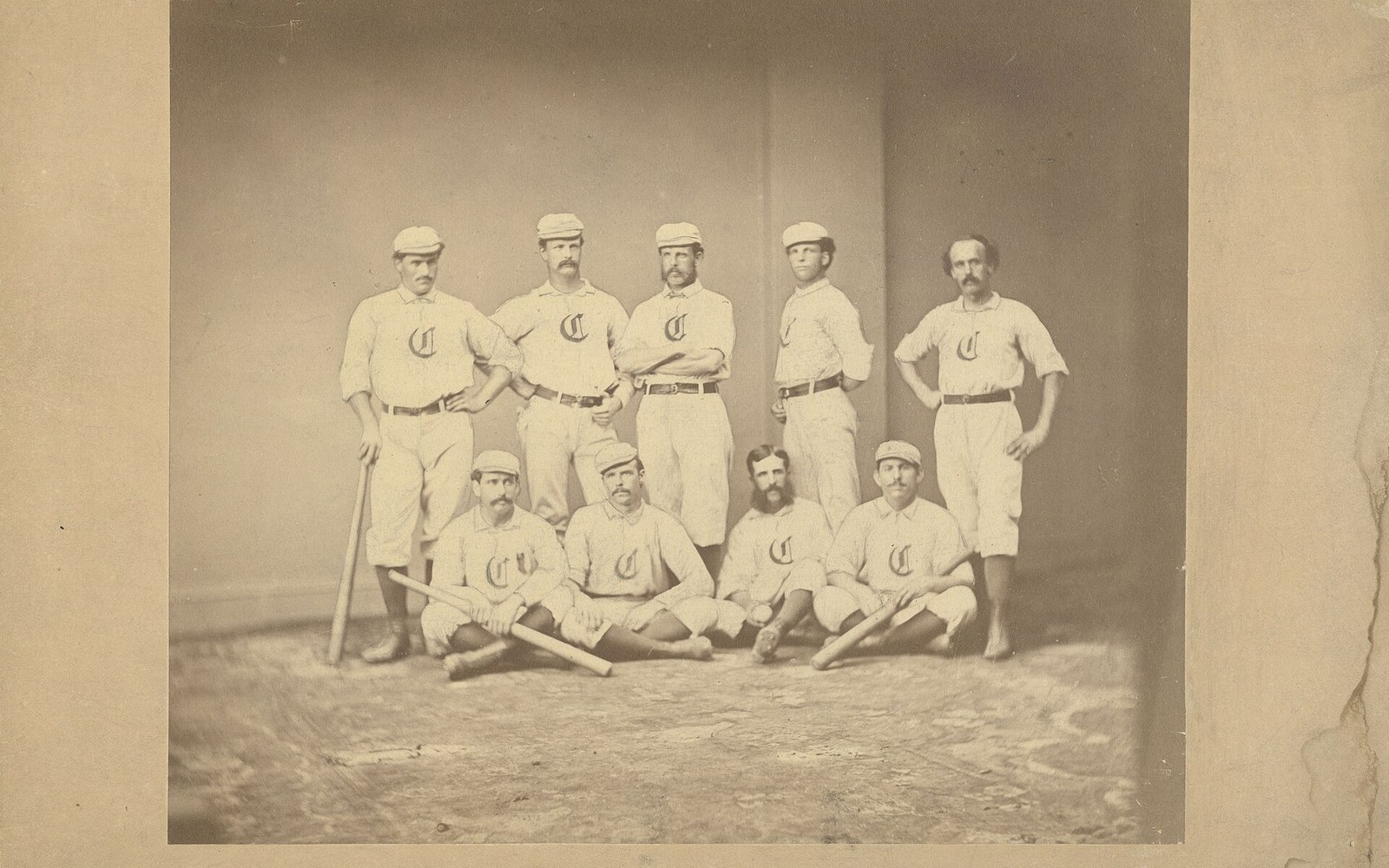
The 1869 Cincinnati Red Stockings were the first openly all-professional baseball club, going undefeated through 57 games under Harry Wright. The First Team That Admitted It Was Paying Everyone
Photo: Cincinnati Red Stockings, 1869 - DPLA - a61b113d0e78e3c1fc904330bb2fcbed · Wikimedia CommonsFrom the record
Chronology
- 1965Johnny Bench drafted
- June 30, 1970Riverfront Stadium opens; Reds move from Crosley Field
- 1970First World Series appearance in the new stadium (Reds lose to Baltimore)
- 1972World Series appearance (Reds lose to Oakland)
- 1973Pete Rose named NL MVP
- 1975Reds win World Series; Rose named Series MVP; Game 6 vs. Boston widely documented as among the most memorable in Series history
- 1976Reds sweep Yankees; back-to-back championships confirmed
- 1978Sparky Anderson's final season as Reds manager
- 1996Riverfront Stadium renamed Cinergy Field
- 2002Stadium demolished
From the record
Core roster, 1975–76
- Johnny Benchcatcher; drafted 1965; two-time NL MVP (1970, 1972)
- Tony Pérezfirst base; consistent run-production across the full Machine era
- Joe Morgansecond base; arrived 1972; two consecutive NL MVP awards (1975, 1976)
- Pete Roseoutfield/third base; 1973 NL MVP; 1975 World Series MVP
- Ken Griffey Sr.outfield
- Dave Concepciónshortstop
- Cesar Gerónimocenter field
- Sparky Andersonmanager, 1970–1978
More in Queen City