Eighteen Years on the Ohio Bank Before She Wrote the Book
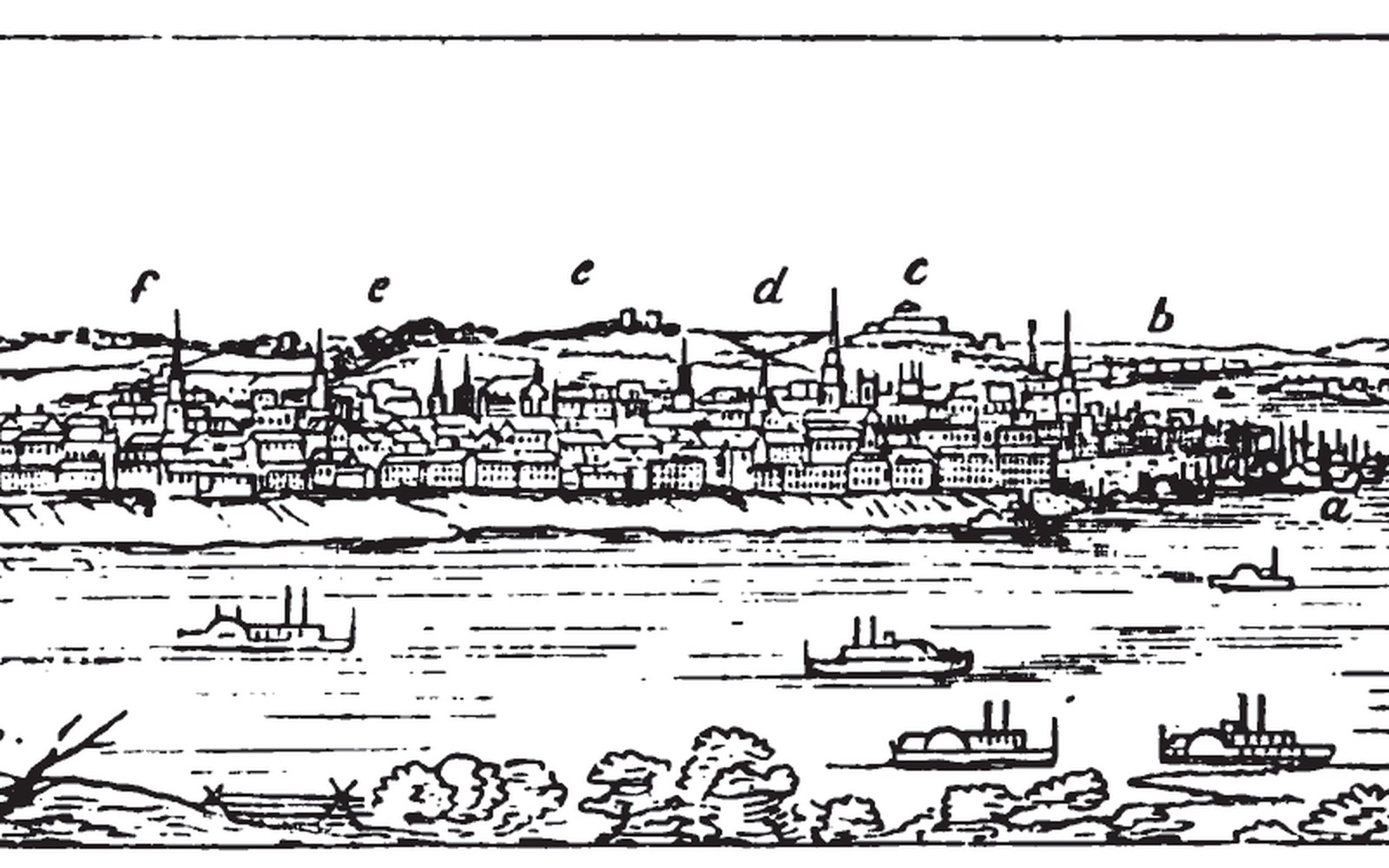
Harriet Beecher Stowe lived in Cincinnati from 1832 to 1850, crossing into Kentucky and witnessing the operations of the Underground Railroad before writing Uncle Tom's Cabin.
Photo: Cincinnati from the Kentucky side of the Ohio River (circa 1861) · Wikimedia CommonsHarriet Beecher Stowe spent nearly two decades in Cincinnati — crossing the river, meeting freedom-seekers and accumulating the raw material that became the most politically consequential novel in American history.
The Lane Seminary Years
Harriet Beecher arrived in Cincinnati in 1832, aged twenty-one, when her father Lyman Beecher accepted the presidency of Lane Theological Seminary in Walnut Hills, then a separate village on the eastern ridge above the city. The family settled into the seminary household, and Harriet taught at the Western Female Institute, which her sister Catharine had founded. She would remain in Cincinnati until 1850, marrying Calvin Stowe, a Lane faculty member, in 1836 and raising a family in a house on the seminary grounds — a two-storey frame structure that still stood into the twentieth century and is documented in the Historic American Buildings Survey ↗.
The city she moved into was one of the most contested places in antebellum America. The Ohio River, visible from the Walnut Hills ridge, was not merely a waterway but a legal boundary: free soil on the northern bank, slavery legal on the southern one. Covington and Newport lay directly opposite Cincinnati, and the crossings were constant — commerce, families, and, by covert arrangement, people escaping bondage. Stowe watched all of it from a vantage that was morally exposed and geographically precise.
What the River Showed Her
In 1833 and again later in the decade, Stowe crossed into Kentucky, staying at the Washington, Kentucky, plantation home of a family acquaintance. The visit gave her direct observation of enslaved people at work on a working farm — faces, voices and circumstances she later transposed directly into fiction. She also employed, in her Walnut Hills household, women who had themselves crossed the Ohio and whose accounts she heard firsthand. One episode that reached her — a woman carrying a child across the breaking ice of the frozen river to escape a pursuing enslaver — became the central dramatic scene of Uncle Tom's Cabin ↗, the crossing of Eliza and her son Harry.
Lane Seminary itself was a crucible. In 1834 its students, led by Theodore Dwight Weld, held a series of debates on abolition and colonisation that became known as the Lane Debates, after which the seminary's trustees attempted to suppress further discussion. The episode radicalised a generation of students and placed the Beecher household at the centre of one of the decade's sharpest public arguments about slavery. Lyman Beecher tried to hold a moderate position; his daughter absorbed the tension and held it for years.
The Walnut Hills neighbourhood also placed the family within reach of Cincinnati's African American community concentrated in the basin below. The network of churches, households and informal contacts that constituted the Underground Railroad in Cincinnati ran through those relationships. John Rankin, a minister in Ripley, Ohio, forty miles upriver, was among the correspondents in that network; it was a version of his family's documented experience sheltering a woman who had crossed the ice that reached Stowe and fixed itself in her imagination.
The family settled into the seminary household, and Harriet taught at the Western Female Institute, which her sister Catharine had founded.
After Cincinnati, the Book
The Stowes left Cincinnati in 1850 when Calvin accepted a position at Bowdoin College in Brunswick, Maine. Within months Congress passed the Fugitive Slave Act, which required citizens in free states to assist in the capture and return of escaped enslaved people. The Act made Stowe's Cincinnati memories both more urgent and more dangerous to ignore. She began writing what became Uncle Tom's Cabin in 1851; it was serialised in the abolitionist paper The National Era and published in book form in 1852 ↗, selling 300,000 copies in its first year in the United States alone.
The eighteen years in Cincinnati did not produce the novel — Brunswick did. But they supplied nearly everything in it: the river, the ice, the Kentucky farm, the freedom-seekers in her kitchen and the theological argument about human conscience that runs beneath every chapter. The Ohio bank was the school; Maine was where she wrote the examination.
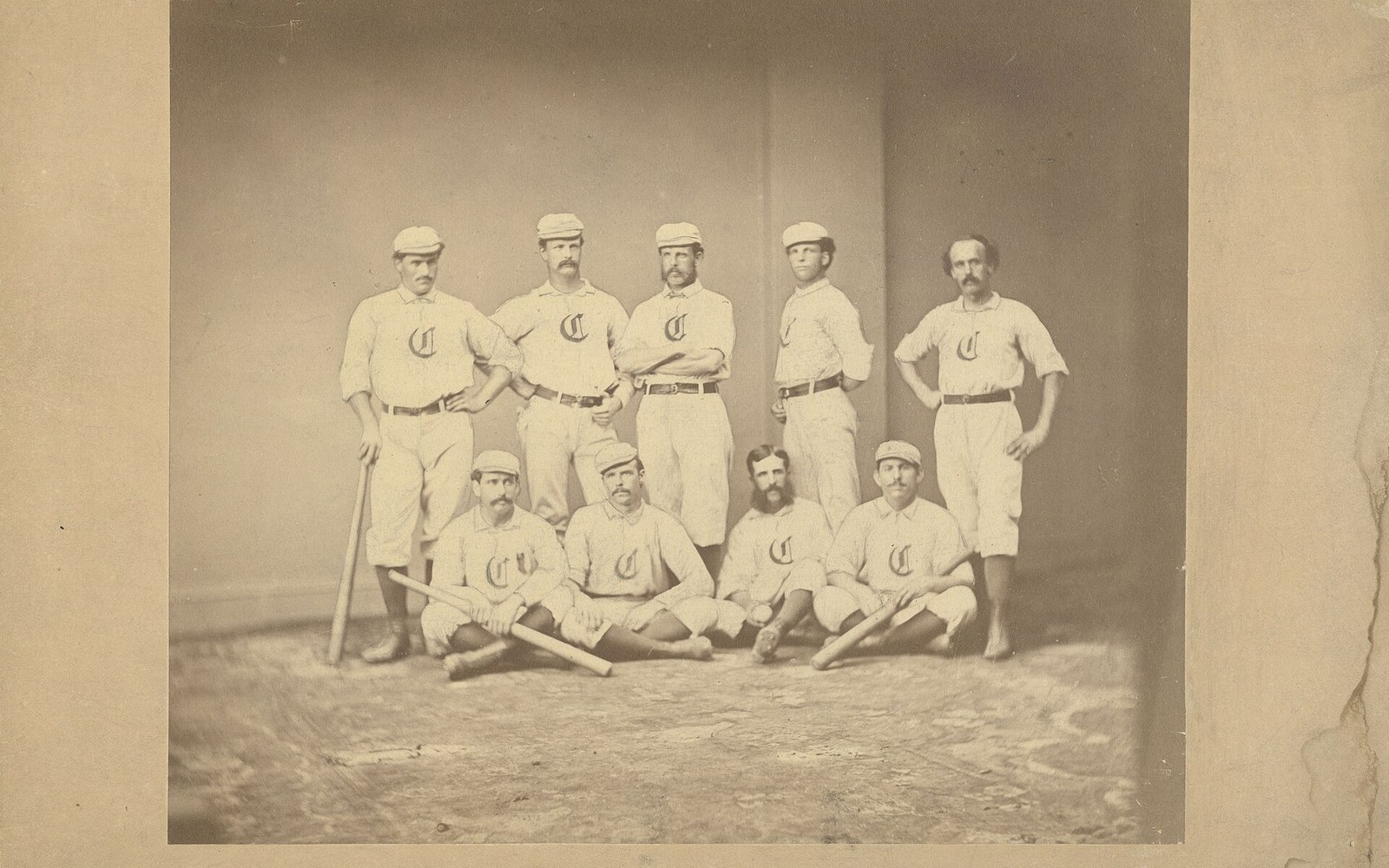
The 1869 Cincinnati Red Stockings were the first openly all-professional baseball club, going undefeated through 57 games under Harry Wright. The First Team That Admitted It Was Paying Everyone
Photo: Cincinnati Red Stockings, 1869 - DPLA - a61b113d0e78e3c1fc904330bb2fcbed · Wikimedia CommonsFrom the record
Chronology
- 1832Harriet Beecher arrives in Cincinnati with her father Lyman Beecher, new president of Lane Theological Seminary
- 1833 and later 1830s visits to Kentucky plantation 1834Lane Debates on abolition; seminary trustees attempt to suppress student discussion
- 1836Harriet Beecher marries Calvin Stowe, Lane faculty member
- 1850Stowes depart Cincinnati for Bowdoin College, Maine; Fugitive Slave Act passed
- 1851serialisation of Uncle Tom's Cabin begins in The National Era
- 1852book publication; 300,000 copies sold in the United States in the first year
From the record
Key places in the story
- Walnut Hillsridge neighbourhood east of the Cincinnati basin; site of Lane Seminary and the Stowe household
- Covington and Newport, Kentuckydirectly opposite Cincinnati across the Ohio; the legal boundary between free and slave territory
- Washington, Kentuckynearby town where Stowe visited a plantation and observed enslaved people firsthand
- Ripley, Ohioforty miles upriver; home of abolitionist minister John Rankin, whose family sheltered a woman who crossed the frozen Ohio — the documented seed of Eliza's ice crossing
More in Queen City